




Addressing Front Lower Control Arm Hydro-Bushings on Monongalia County Roads
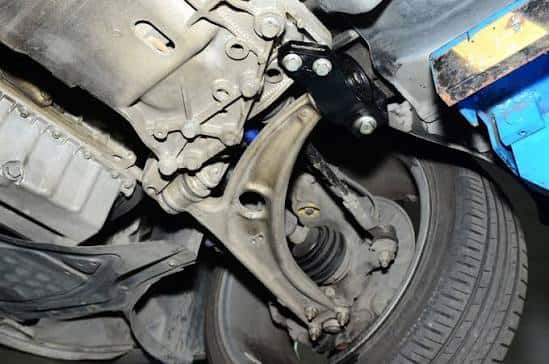
Key Takeaways
- Hydro-bushings use fluid-filled chambers to absorb impact more effectively than solid rubber: This design offers superior ride comfort and handling precision, but it introduces a fluid seal that can eventually fail.
- Monongalia County’s rough pavement and freeze-thaw cycles accelerate bushing wear: Frost heave and patched roads common throughout the county create repeated, uneven impact loads.
- A failing hydro-bushing changes handling before it becomes visibly obvious: Subtle clunks, vagueness in steering, or uneven tire wear often appear well before a bushing fully fails.
- Left unaddressed, bushing failure accelerates wear on adjacent suspension components: A control arm operating on a failed bushing transfers stress to ball joints and other connected parts.
Monongalia County drivers navigating the county’s patchwork of aging pavement, freeze-thaw-damaged roads, and the rougher secondary routes outside Morgantown proper are putting more cumulative stress on their Volkswagen’s front lower control arm hydro-bushings than drivers in regions with more consistently maintained roads. A hydro-bushing that fails completely and is left unaddressed can lead to accelerated wear on the ball joint and control arm itself, turning what would have been a moderate bushing replacement into a more extensive suspension repair. Understanding how these components work and what Monongalia County’s roads ask of them helps you catch a developing issue before it compounds.
What Hydro-Bushings Do and How They Differ from Standard Bushings
The front lower control arm connects the suspension knuckle to the vehicle’s subframe, and the bushing at that connection point allows for controlled movement while isolating road vibration and impact from being transmitted directly into the chassis. Standard suspension bushings accomplish this with solid rubber, which compresses and flexes to absorb movement. Hydro-bushings, used in many Volkswagen models for their superior ride quality, take a more sophisticated approach: they incorporate an internal fluid-filled chamber within the rubber body, allowing the bushing to respond differently to sudden impacts versus sustained loads.
This fluid damping effect is what gives Volkswagen suspensions their particular blend of comfort and precision, absorbing sharp impacts more effectively than solid rubber while still maintaining the responsiveness needed for confident handling. The tradeoff is added complexity. A hydro-bushing has an internal seal containing that fluid, and unlike a solid rubber bushing that simply wears and hardens over time, a hydro-bushing can also fail if that internal seal degrades and the fluid leaks out or breaks down.
Why Monongalia County’s Roads Are Particularly Hard on This Component
Monongalia County’s road network includes a considerable amount of aging pavement, and the region’s freeze-thaw cycle, common throughout West Virginia’s winters, is especially hard on road surfaces. Water seeps into small cracks, freezes, expands, and gradually breaks pavement apart from within, a process that repeats every winter and leaves behind the kind of frost heave, potholes, and patched repairs that are a familiar sight on routes throughout the county, including many of the secondary roads connecting Morgantown to surrounding communities.
Each of these surface irregularities delivers an impact to the front suspension, and hydro-bushings, while more capable of absorbing a single sharp impact than solid rubber, are not immune to cumulative wear from repeated exposure. The internal seal, subjected to years of impact-driven flexing, gradually becomes more susceptible to fatigue than it would in a region with smoother, more consistently maintained roads. A vehicle driven regularly on Monongalia County’s rougher stretches is, in effect, asking more of that seal’s long-term durability than the same vehicle would face in a smoother driving environment.
How Hydro-Bushing Wear Progresses
Hydro-bushing failure isn’t typically sudden. It tends to progress gradually, often beginning with a slow fluid leak that reduces the bushing’s damping effectiveness before it fails outright. As internal fluid diminishes, the bushing starts behaving more like a standard, less capable rubber bushing, losing some of the precision and impact absorption it was designed to provide. Eventually, if left unaddressed, the bushing can deteriorate to the point of allowing excessive control arm movement, which affects both ride quality and, more importantly, suspension geometry and handling precision.
Because the control arm relies on the bushing to remain properly positioned relative to the subframe, a badly worn or failed hydro-bushing changes how force is transmitted through the suspension system. This doesn’t just affect the bushing itself. The ball joint at the outer end of the control arm and the associated mounting hardware begin absorbing stress patterns they weren’t designed for, which is why a neglected hydro-bushing issue tends to expand into a broader suspension repair rather than staying contained to a single component.
Signs Your Hydro-Bushings May Be Wearing
- A clunking or knocking noise from the front suspension, particularly noticeable when driving over bumps, patched pavement, or frost-heaved sections of road
- A slightly vague or looser feeling in the steering, especially at lower speeds, as the control arm’s positioning becomes less precise
- Uneven front tire wear that develops without an otherwise obvious cause, since altered suspension geometry can subtly change alignment even when the alignment itself hasn’t been physically adjusted
- Visible fluid residue or wetness around the bushing area during a routine inspection, an early indicator of a developing seal leak before other symptoms appear
None of these signs necessarily mean immediate failure, but each is worth having checked, since hydro-bushing wear is one of those issues that’s considerably more affordable to catch early than to let progress toward affecting adjacent components.
What Inspection and Service Typically Involve
A proper inspection of the front lower control arm bushings involves a visual check for fluid leakage, an assessment of play or movement in the control arm under load, and in some cases a road test to confirm whether a noise or handling change correlates with what’s found. Because hydro-bushings are typically integrated into the control arm assembly rather than sold and replaced as a standalone part on many Volkswagen models, service often involves replacing the control arm assembly itself once meaningful wear is confirmed, which is one more reason catching the issue at the early leak stage, rather than after full failure, matters for keeping the repair contained.
If your regular driving includes Monongalia County’s rougher secondary roads or areas prone to frost heave and pavement patching each winter, it’s worth having your front suspension checked with that road environment in mind, rather than waiting for a noise or handling change to become impossible to ignore. Volkswagen Morgantown, located at 401 Mary Jane Wood Circle, Morgantown, WV 26501, offers front suspension inspections that check hydro-bushing condition, control arm play, and related component wear, helping catch a developing issue before it spreads into a larger repair.

0 comment(s) so far on Addressing Front Lower Control Arm Hydro-Bushings on Monongalia County Roads