




Brake Fade vs. Brake Wear: A Guide for I-79 Commuters
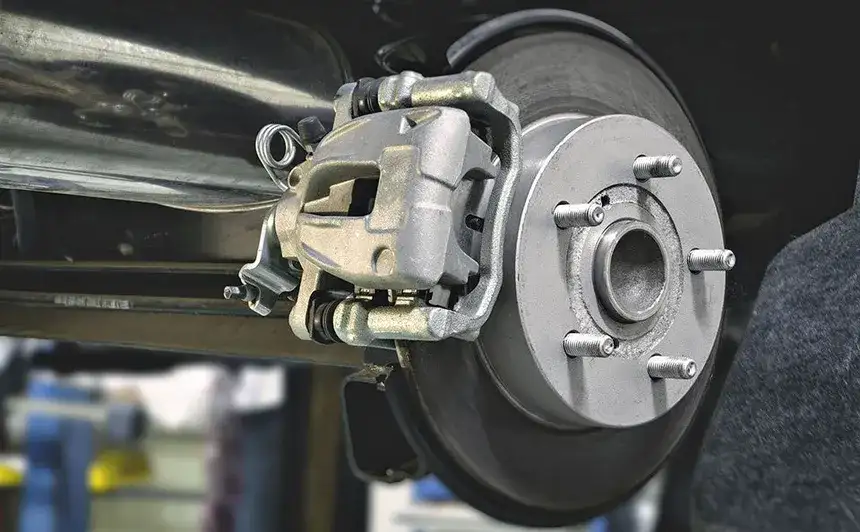
A Volkswagen Tiguan owner came into our service bay last month after a frightening experience descending the Morgantown hill on I-79 southbound toward Fairmont. She had pressed the brake pedal firmly and felt it go soft beneath her foot, requiring significantly more pressure than usual to slow the vehicle. She had been driving on pads that were down to 2mm and brake fluid that hadn’t been changed in three years. The full brake system restoration, including pads, rotors, and a fluid flush on both axles, cost $1,240. Catching either issue at a routine inspection would have cost $380.
If you drive I-79 regularly between Morgantown and Fairmont, you already know what that stretch of highway does to a braking system. The southbound descent from the Morgantown hill puts sustained load on the brakes in a way that flat-road driving simply never does, and the return trip northbound means your brakes are doing meaningful work on the grade climbing back toward Star City before you even reach the WVU Coliseum interchange. For Volkswagen owners in the Morgantown area, understanding your braking system is not just a maintenance consideration. It is a safety one.
The confusion between brake fade and brake wear is one of the most common issues we encounter at Volkswagen Morgantown. Both affect stopping performance. Both can develop quietly before they become dangerous. But they have different causes, different warning signs, and different consequences, and treating one when you have the other is a fast path to an expensive outcome. This guide exists to help I-79 commuters understand exactly what is happening when their brakes feel different than they should.
Brake Wear: The Gradual Problem
Brake wear is exactly what it sounds like. Every time you apply the brakes, the friction material on your brake pads transfers a small amount of itself onto the rotor surface to create the stopping force your vehicle needs. Over tens of thousands of miles, that friction material depletes. When the pad material gets thin enough, stopping distances increase, pedal feel changes, and eventually the metal backing plate of the pad contacts the rotor directly, which damages both components and creates the metal-on-metal grinding sound most drivers recognize as serious.
What makes brake wear particularly relevant for I-79 commuters is that West Virginia’s grades accelerate the process. A driver commuting between Morgantown and Fairmont daily puts more thermal and mechanical stress on their brake pads than someone covering the same mileage on flat roads through Columbus or Pittsburgh. The sustained braking on the southbound descent toward Fairmont and the traffic-influenced braking on the northbound approach to Morgantown add up to a wear rate that can outpace the standard replacement interval by a meaningful margin.
What Worn Brakes Feel and Sound Like
Worn pads typically announce themselves in a sequence. The first indicator is a high-pitched squeal during normal braking, which is the wear indicator tab built into most modern brake pads making contact with the rotor to signal that replacement is due. If that squeal is ignored, the next stage is a grinding or scraping sound that indicates the pad material is gone and metal contact has begun. By that point, rotor damage is already occurring and the repair cost has increased substantially beyond what pad replacement alone would have been.
Pedal feel with worn pads changes gradually rather than suddenly. The pedal may travel slightly further before firm resistance builds, and stopping distances lengthen in a way that is easy to attribute to road conditions rather than brake condition. On I-79’s grades, that extra stopping distance matters more than it would on a flat surface.
Brake Fade: The Sudden Problem 🌡️
Brake fade is a different animal entirely. Where brake wear develops over thousands of miles, brake fade can develop within a single descent. It occurs when the braking system generates more heat than it can dissipate, temporarily reducing its ability to produce stopping force. On a long downhill run like the grade on I-79 southbound toward Fairmont, or the descent on US-19 south of Morgantown toward Grafton, a driver who rides the brakes continuously rather than using engine braking can bring the system to temperatures where fade begins.
There are two primary forms of fade. Pad fade occurs when the brake pad’s friction material overheats and begins to outgas, creating a thin vapor layer between the pad and rotor that reduces friction. Fluid fade, also called vapor lock, occurs when the brake fluid itself absorbs enough heat to partially vaporize, creating compressible gas in the hydraulic lines. When you press the pedal against compressible gas rather than incompressible fluid, the pedal goes soft and stopping force drops dramatically. Both forms of fade are temporary in that the brakes recover as temperatures drop, but both can be dangerous during the event itself.
Why Brake Fluid Condition Determines Fade Resistance
Fresh brake fluid has a dry boiling point around 446 degrees Fahrenheit for DOT 4 fluid, which is standard in most Volkswagen vehicles. The problem is that brake fluid is hygroscopic, meaning it absorbs moisture from the atmosphere over time through the brake lines and reservoir. As moisture content rises, the boiling point drops. Fluid that has absorbed just 3 percent moisture can have a wet boiling point as low as 311 degrees. On a sustained downhill run on I-79, brake temperatures can approach and exceed that threshold in degraded fluid, which is exactly when vapor lock occurs.
This is why brake fluid condition is directly tied to fade resistance, and why a driver with otherwise healthy pads and rotors can still experience dangerous fade if the fluid hasn’t been serviced on schedule.
What Proper Brake Maintenance Costs vs. What Neglect Costs 💰
Keeping a Volkswagen’s brake system in proper condition on the I-79 corridor is not expensive relative to what deferred maintenance produces:
- Brake inspection (standalone): $0 to $45 at most scheduled service visits
- Brake fluid flush: $110 to $160
- Front brake pad replacement: $180 to $280
- Front pad and rotor replacement: $380 to $560
- Rear pad and rotor replacement: $320 to $480
Proactive brake maintenance over 40,000 miles: $700 to $1,000 total
Deferred maintenance corrections:
- Pad, rotor, and fluid service after neglect: $900 to $1,400
- Caliper replacement from heat damage: $350 to $700 additional
- ABS module damage from fluid contamination: $800 to $1,500 additional
Brake systems that are maintained within their service windows cost a predictable amount over time. Brake systems that are deferred until symptoms appear cost unpredictably more, and the unpredictability skews toward the expensive end when West Virginia grades have been involved.
A Commuter Who Confused the Two
A Golf GTI owner from Star City came in last fall after experiencing what he described as a soft pedal on the southbound I-79 descent near the Westover exit. He assumed his brakes were worn and asked for a pad replacement. When we inspected the system, the pads had 4mm of material remaining, which is adequate. The issue was brake fluid that had been in the system for four years and had a tested boiling point well below the threshold where WV hill driving creates risk. He had experienced fluid fade, not pad wear. A fluid flush for $130 resolved the issue completely. Had he gone elsewhere and received the pad replacement he asked for without a proper diagnosis, he would have spent $220 on parts he didn’t need and still had the fade problem on his next commute down the hill.
Warning Signs Your Brake System Needs Attention ⚠️
Brake fade and brake wear produce overlapping but distinguishable symptoms. Knowing which you’re experiencing helps our service team get to the right solution faster:
Soft or spongy pedal on a downhill run that firms up afterward: This is the signature of fluid fade. The pedal softens as fluid approaches its boiling point and returns to normal as the system cools. If this has happened once on I-79, the fluid needs testing before it happens again at a worse moment.
Squealing during normal stops that isn’t weather-related: Morning squeal that clears after the first few stops is often moisture on cold rotors. Squeal that persists through normal driving temperatures is the wear indicator telling you the pads are approaching the end of their service life.
Grinding or metal-on-metal sound during braking: This means pad material is gone. The rotor is being damaged with every stop. This is a same-week service situation, not a schedule-when-convenient one.
Burning smell after descending I-79 or US-19: Heat from sustained braking on grades like the Morgantown hill produces a chemical smell when pads or fluid are being pushed past their thermal limits. This warrants an inspection before the next significant hill descent.
Pedal that travels further than normal before resistance builds: This can indicate worn pads, air in the brake lines, or fluid that has degraded enough to compress slightly under load. All three causes deserve diagnosis rather than monitoring.
Pulling to one side during braking: Uneven pad wear or a sticky caliper causes the vehicle to track toward the side with more braking force. On I-79’s curves near the Uffington exit, that pull is amplified by the grade and can feel more dramatic than it would on a flat road.
Vibration through the pedal or steering wheel during stops: Rotor warping from repeated heat cycles on WV grades produces a pulsing sensation through the pedal. It is a sign the rotors have been stressed beyond their thermal tolerance and need inspection or replacement.
What Our Service Team Says
“The I-79 corridor between Morgantown and Fairmont is genuinely one of the more demanding commutes for a brake system that I’ve seen in this region. What I tell commuters is that the two-year brake fluid interval is not conservative for this area, it’s appropriate. And the pad wear check isn’t something to do when you hear noise, it’s something to do every oil change. By the time you hear something on that hill, you’ve usually already lost some rotor life.” — Chris Alvarez, Lead Service Technician, Volkswagen Morgantown
When Knowing the Difference Saved a Rotor
Patricia drives a Jetta between Morgantown and her office in Fairmont five days a week, covering the I-79 grades twice daily. She came in after noticing her pedal felt slightly different on the downhill run, not dramatically soft but less firm than she expected. Rather than assuming worn pads, she described the symptom accurately and let us diagnose before recommending anything. The pads were at 5mm and in good shape. The fluid tested at a wet boiling point of 290 degrees, well below safe threshold for her commute. A fluid flush for $140 restored the pedal feel she expected. Her rotors and pads remained untouched and are on track for their full expected service life.
Your 30-Day Brake System Check
This week, pay deliberate attention to your pedal feel on the next I-79 descent you make, whether that’s the southbound grade toward Fairmont or the approach into Morgantown from the north. Press the pedal firmly at the top of the grade and note whether it feels solid and consistent. A pedal that feels firm and progressive is doing its job. One that feels softer than you remember, or that requires more travel before resistance builds, is telling you something worth acting on before the next commute.
Within two weeks, check your service records for the last brake fluid flush date. If it has been more than two years or you cannot find a record of it being done, schedule a fluid test at Volkswagen Morgantown. The test itself is quick, and knowing your fluid’s current boiling point threshold relative to your daily commute is genuinely useful information for an I-79 driver.
By month’s end, schedule a full brake inspection if you haven’t had one in the past year. Ask our team to measure pad thickness on all four corners, inspect rotor condition, and test the brake fluid. Those three data points together give you a complete picture of where your brake system stands and how much runway you have before any component needs attention. The inspection takes less than 30 minutes and is the most direct way to know whether your brakes are ready for another season of I-79 commuting.
Schedule Your Brake Service at Volkswagen Morgantown
The Tiguan owner who came in after that frightening descent on I-79 southbound now comes in every spring and fall for a brake system check. She has been on a consistent fluid and pad schedule since, and her brake system has performed exactly as it should through every commute since that first visit. She told us afterward that she wished she had understood the difference between fade and wear before she felt it on the hill. That’s exactly what this guide is for.
Brake systems that are maintained don’t surprise their drivers on mountain grades. Volkswagen Morgantown’s service team knows the I-79 corridor and knows what it asks of a braking system. We’re here to make sure yours is ready for it.
Visit us at Volkswagen Morgantown, located at 401 Mary Jane Wood Circle, Morgantown, WV 26501. Our service department is open Monday through Saturday. Schedule your brake inspection online through our website or speak with one of our service advisors directly. We serve drivers from Morgantown, Star City, Westover, Granville, Fairmont, and throughout Monongalia County. I-79 will test your brakes every single commute. Make sure they’re ready. 🛑

0 comment(s) so far on Brake Fade vs. Brake Wear: A Guide for I-79 Commuters