




Brake Fluid & Humidity: Preventing Moisture Contamination in Your VW Braking System during WV Summers.
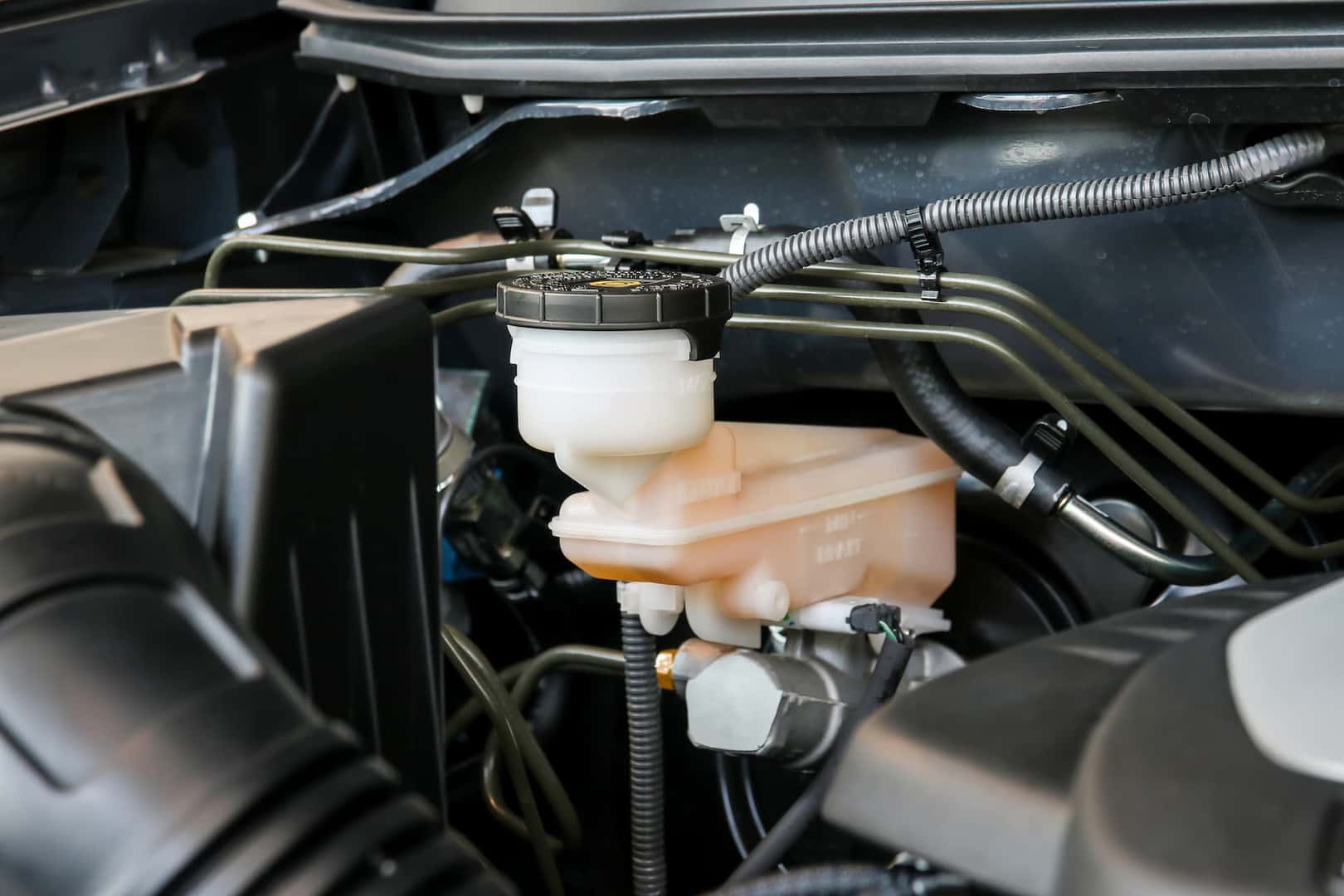
A Volkswagen Passat owner came into our service bay last July after experiencing a soft, spongy brake pedal during his commute on US-119 southbound toward Grafton. The pedal had felt progressively less firm over several weeks of summer driving but he had attributed the change to the heat rather than investigating it. When our technician tested the brake fluid, the boiling point had dropped to 285 degrees Fahrenheit from moisture absorption that had accelerated significantly through the preceding humid summer months. A brake fluid flush restored the system to full thermal capacity for $140. Had the degraded fluid produced a vapor lock event on the US-119 grade descent toward Grafton, the consequences would have extended well beyond a $140 service.
West Virginia summers combine heat and humidity in a way that creates a specific and underappreciated threat to the brake systems of Volkswagen vehicles driven on the region’s mountain roads. The Morgantown area’s position in the Monongahela River valley produces summer humidity levels that are higher than most drivers from drier climates expect, and those humidity levels interact with the hygroscopic chemistry of brake fluid in a way that accelerates moisture contamination faster than the standard two-year replacement interval accounts for in high-humidity driving environments. For VW owners who use US-119, I-79, and US-33 regularly, the brake system’s thermal performance on mountain grade descents is a safety consideration that the fluid’s condition directly determines, and a humid West Virginia summer is the specific environmental condition that degrades that condition fastest.
Brake fluid moisture contamination is not a dramatic failure. It is a gradual process that produces a gradual symptom, the slowly softening pedal feel that the Passat owner attributed to heat rather than investigating as a fluid condition issue. That gradual presentation is what makes it specifically dangerous in a mountain driving environment where the brake system’s thermal demands are highest and where a compromised fluid’s reduced boiling point is most likely to be reached during a grade descent rather than during a flat-road commute where the pedal change might remain subtle enough to continue ignoring.
At Volkswagen Morgantown, brake fluid testing is one of the most consequential quick checks we perform on vehicles that come through our service bay, and the results we see in Morgantown-area VW vehicles through the summer and fall reflect the humidity season’s specific effect on fluid condition in ways that are worth understanding before the next US-119 or I-79 grade descent tests the fluid rather than a service appointment.
How West Virginia’s Humidity Accelerates Moisture Contamination
Brake fluid’s hygroscopic property, its ability to absorb moisture from the atmosphere, is not a defect in the fluid’s design. It is an intentional characteristic that allows the fluid to absorb small amounts of moisture that inevitably enter the brake system through microscopic permeation of the rubber seals, hoses, and reservoir cap without allowing that moisture to pool and cause localized corrosion of the system’s metal components. The moisture that is absorbed into the fluid is distributed throughout the circuit rather than collecting at low points where corrosion damage would otherwise be concentrated.
The tradeoff for this design benefit is that the fluid’s boiling point decreases as its moisture content increases. Fresh DOT 4 fluid, which is the specification for most current Volkswagen vehicles including those in the Morgantown fleet, has a dry boiling point of approximately 446 degrees Fahrenheit. As moisture content rises from zero to 3 percent through atmospheric absorption, the wet boiling point drops to approximately 311 degrees Fahrenheit. The 135-degree difference between those two numbers represents the margin between a brake system that handles sustained I-79 grade descent braking comfortably and one that approaches vapor lock under the same demand.
West Virginia’s summer humidity specifically accelerates the rate at which brake fluid absorbs atmospheric moisture because the higher the humidity in the air surrounding the brake system, the faster the permeation process through the seals, hoses, and reservoir cap proceeds. A Volkswagen with brake fluid that is 12 months old in a dry climate like the western United States may have absorbed 0.5 to 1 percent moisture content. The same vehicle with fluid of the same age in Morgantown’s summer humidity may have absorbed 1.5 to 2.5 percent moisture content because the atmospheric moisture driving the permeation process has been consistently higher through the summer driving season. That difference in moisture content corresponds to a meaningful difference in wet boiling point that the I-79 and US-119 grade descents will either stay safely above or uncomfortably approach depending on where the fluid’s condition lands.
Why Morgantown’s Road Network Makes Fluid Condition a Safety Issue 🏔️
The relationship between brake fluid moisture content and braking safety is not equally consequential in all driving environments. In a flat-road driving environment where brake temperatures rarely exceed 200 degrees Fahrenheit during normal operation, a fluid with a wet boiling point of 311 degrees has 111 degrees of thermal margin above normal operating temperature, which is adequate under all normal driving conditions. In Morgantown’s driving environment, that margin calculation changes significantly.
The US-119 southbound descent toward Grafton, the I-79 grade sections between Morgantown and the Chestnut Ridge area, and the US-33 eastbound approach toward Elkins all create sustained braking demands that push brake temperatures above the flat-road baseline. A loaded Volkswagen descending US-119’s grade sections with traffic conditions that require consistent speed management rather than light braking generates brake temperatures in a range that approaches or reaches the 311-degree wet boiling point threshold of a fluid that has been absorbing Morgantown’s summer humidity for 18 to 24 months.
At that threshold, the fluid in the hottest section of the brake circuit, typically the front caliper feed lines that see the highest thermal load from the front brakes’ disproportionate braking contribution, begins to partially vaporize. The vapor that forms is compressible in a way that liquid brake fluid is not, and a partially vaporized brake line produces the spongy pedal feel that signals vapor lock has begun. The driver who is managing a US-119 grade descent and experiences a suddenly softer pedal is in the specific situation that the Passat owner described and that the $140 fluid flush would have prevented.
What Brake Fluid Service Costs vs. What Humidity-Related Failure Costs 💰
The brake fluid service cost comparison in the context of Morgantown’s summer humidity environment is one of the clearest preventive maintenance value calculations available to VW owners:
Proactive brake fluid service at Volkswagen Morgantown:
- Brake fluid boiling point test (standalone): $25 to $45
- Full brake fluid flush with VW-specification DOT 4: $130 to $165
- Annual fluid test and flush on humid WV summer schedule: $130 to $165 per year
Reactive costs from humidity-accelerated fluid failure:
- Vapor lock event on US-119 or I-79 grade descent: Variable, potentially catastrophic
- Emergency brake system diagnosis after soft pedal event: $85 to $130
- Fluid flush following confirmed vapor lock event: $130 to $165 plus emergency diagnostic cost
- Caliper or rotor damage from heat event during degraded fluid operation: $350 to $900
- ABS module fault from heat-related fluid contamination: $420 to $780
Brake fluid service on appropriate humid-climate interval over three years: $390 to $495 total
Reactive correction after humidity-related brake system compromise: $585 to $1,975 depending on what the compromised fluid event produced before correction
The fluid test that costs $25 to $45 is the most efficient entry point into the brake fluid management process for a Morgantown VW owner who is uncertain about their fluid’s current condition. The test’s result determines whether a flush is immediately necessary or whether the current fluid has adequate boiling point margin for the next several months of WV summer driving.
A Star City Commuter Who Caught It Before the Grade
A Volkswagen Golf owner from Star City came in last August specifically after reading about the relationship between humidity and brake fluid boiling point in a VW owner’s forum and wanting to know where her fluid stood going into the heaviest traffic period of WVU’s fall semester. She had 22 months of fluid age and had been driving US-19 south of Morgantown and I-79 regularly through the preceding summer. Our fluid test showed a wet boiling point of 295 degrees Fahrenheit, which is above the vapor lock threshold for normal driving but within the range where sustained grade descent braking on US-119 or the I-79 southbound approach from Morgantown toward Fairmont would be operating with a thermal margin that the summer’s humidity had substantially reduced. We performed the flush for $145 and documented the restored boiling point at 412 degrees Fahrenheit. She made the fall semester commute pattern, which included regular US-19 grade work, without any pedal feel change through the entire season. The fluid test that cost $25 and the flush that cost $145 converted an unknown fluid condition into a confirmed safe system before the fall semester’s driving demand tested it.
Warning Signs Your Taos Brake Fluid Needs Attention ⚠️
West Virginia’s humidity produces a recognizable set of brake fluid degradation indicators that Morgantown-area VW owners should recognize and act on before the grade sections of the local road network reveal the condition at maximum demand:
Brake pedal that feels progressively less firm over the course of summer: A pedal that was firm in May and feels noticeably softer in August without any brake hardware change is showing the cumulative moisture absorption effect of a Morgantown summer on brake fluid that is approaching or past its service window. The progression is gradual enough to attribute to other causes, but in a VW with 18 to 24 months of fluid age being driven on WV’s humidity-laden summer roads, the fluid condition is the most likely explanation.
Soft or spongy pedal specifically during or after grade descent braking: A pedal that feels firmer at the top of the US-119 or I-79 grade than at the bottom, or one that requires significantly more pressure after a sustained descent than before it, is showing the temperature-driven behavior of fluid that is approaching its boiling threshold under sustained thermal load. This symptom on a grade deserves a same-week fluid service rather than monitoring across additional mountain commutes.
Brake fluid that appears darker than normal in the reservoir: Fresh DOT 4 fluid is nearly clear to very light amber. Fluid that has darkened to amber, brown, or darker through the summer season has oxidized from both heat and moisture exposure beyond its service life. In a Morgantown-area vehicle that has been through a full WV summer, visible darkening in the reservoir is a reliable indicator that the fluid’s boiling point has declined meaningfully from its fresh-fluid specification.
More than 18 months since the last brake fluid flush in a Morgantown driving pattern: The standard two-year replacement interval is calibrated for average humidity conditions. A Morgantown-area VW that has been through an 18-month period that includes two WV summer humidity seasons is almost certainly carrying fluid with moisture content that warrants a boiling point test regardless of whether any symptom has appeared. The test takes 10 minutes and produces a specific number that tells you exactly where the fluid stands.
ABS warning that appeared during a hard stop on a grade: ABS systems monitor brake circuit hydraulic consistency and can detect the pressure anomalies that partially vaporized fluid introduces. A warning that appeared during a hard braking event on I-79 or US-119 and then cleared should not be dismissed as a sensor transient without a brake fluid test, because the ABS system may have detected the beginning of a vapor lock event that the fluid test will confirm.
Burning smell from the brakes after descent braking on WV routes: Heat from sustained grade descent braking on US-119 or I-79 that produces a chemical smell at the bottom of the grade is indicating that brake temperatures have approached or reached a level where the degraded fluid is experiencing partial thermal breakdown. This symptom warrants a same-week fluid service rather than another grade descent on the current fluid.
Fluid service history that includes independent shop visits without documented DOT specification: A service record that shows a brake fluid flush without specifying the DOT grade used leaves open the possibility that a DOT 3 fluid was used in a system specified for DOT 4. DOT 3 has a significantly lower boiling point than DOT 4, and a WV summer’s humidity accelerates DOT 3’s boiling point reduction faster than DOT 4’s. If your records show a fluid service without documented specification, a boiling point test at the next service visit is warranted.
What Our Service Team Says
“Morgantown’s summer humidity is something we factor into every brake fluid conversation we have with local customers, because the two-year interval that works in drier parts of the country does not account for what a Monongalia County summer does to fluid condition in a vehicle that is being driven on grades. What we see on the borescope when we test fluid from Morgantown-area vehicles in August and September is consistently lower boiling points than the same vehicle’s age and mileage would suggest in a drier market. The US-119 grade and the I-79 descent toward Fairmont are not the places to discover that the summer’s humidity has brought the fluid’s boiling point down to where sustained grade braking becomes a vapor lock risk. The $25 test tells you where the fluid stands. The $145 flush corrects it if it needs correction. Those are very manageable numbers before a grade descent and very insufficient ones after one.” — Chris Alvarez, Lead Service Technician, Volkswagen Morgantown
When Pre-Summer Service Protected a Year of Safe Commuting
Patricia drives her Volkswagen Tiguan between her home in Granville and her workplace near the WVU Health Sciences Center on Medical Center Drive daily, a commute that takes her through the elevation changes on Medical Center Drive’s approach and the surface streets that connect the campus ridge to the valley floor where her route begins. She came in last May before the summer humidity season peaked, asking whether she should flush her brake fluid given that it had been 20 months since the last service. Our boiling point test showed 318 degrees Fahrenheit, which is marginally above the vapor lock threshold for normal Morgantown driving but below the comfortable margin we recommend for a vehicle used on WV’s grade sections. We recommended the flush given the trajectory the 20-month humidity exposure had produced and the grade driving her commute includes. The flush for $140 brought her boiling point to 418 degrees Fahrenheit. She completed a full year of Morgantown summer, fall, and winter commuting including regular I-79 trips to visit family in Fairmont without a single brake pedal feel change. The pre-summer timing of the service gave her fluid the highest possible boiling point margin going into the season that would work hardest to reduce it.
Your 30-Day Brake Fluid Summer Readiness Plan
This week, check your service records for the date of the last brake fluid flush and calculate the elapsed time in months. If the interval is 18 months or more and your driving pattern includes any of the grade sections on I-79, US-119, or US-33, a boiling point test this month is appropriate regardless of whether any pedal feel change has appeared. The test takes 10 minutes, costs $25 to $45, and produces a specific number that tells you whether the summer’s humidity has brought your fluid to the point where a flush is needed or whether you have adequate margin for the next several months.
Within two weeks, if the boiling point test produces a reading below 340 degrees Fahrenheit for a vehicle used on WV’s grade sections, schedule the flush before the next sustained grade descent rather than after it. The interval between a test result that warrants a flush and the next US-119 or I-79 grade descent is not the right place for a monitoring period. The flush corrects the condition in 45 minutes and restores the thermal margin that the humidity season has been reducing since the last service.
By month’s end, establish a humidity-adjusted brake fluid service rhythm that accounts for Morgantown’s specific summer conditions rather than following the standard two-year interval designed for average-humidity driving environments. Our service team recommends a boiling point test at every oil change visit for Morgantown-area VW owners who drive grade sections regularly, with a flush performed whenever the test result falls below 340 degrees Fahrenheit regardless of the calendar interval. That protocol converts the fluid’s boiling point from an unknown variable into a documented and managed parameter that the next US-119 descent operates safely within.
Schedule Your Brake Fluid Service at Volkswagen Morgantown
The Passat owner whose softening pedal on US-119 had been developing for weeks before he came in has been on a consistent annual brake fluid test and flush schedule since that visit. His fluid boiling point at each subsequent test has been documented above 380 degrees Fahrenheit going into each summer season, which gives him the thermal margin that the US-119 and I-79 grade work on his regular commutes demands. He told us afterward that the progressive pedal softening had been gradual enough that he had not connected it to the summer humidity until he understood the mechanism. That understanding cost him a $140 flush and a service appointment. The alternative version of that education, a vapor lock event on the US-119 grade toward Grafton, was a more expensive lesson in every dimension.
Our team at Volkswagen Morgantown tests brake fluid at every service visit for customers who request it and includes it at no additional charge in our multi-point inspection. We use only VW-specification DOT 4 fluid at every flush and document the boiling point reading before and after the service so that the fluid condition history is part of your vehicle’s permanent service record.
Visit us at Volkswagen Morgantown, 401 Mary Jane Wood Circle, Morgantown, WV 26501. Our service department is open Monday through Saturday. Schedule your brake fluid test or flush online through our website or speak with one of our service advisors directly. We serve drivers from Morgantown, Star City, Westover, Granville, Fairmont, and throughout Monongalia County. West Virginia’s humidity works on your brake fluid every summer. Make sure your fluid is working for you when the grades demand it. 🛑

0 comment(s) so far on Brake Fluid & Humidity: Preventing Moisture Contamination in Your VW Braking System during WV Summers.