




Cabin & Engine Air Filters: The Overlooked VW Service Item
Key Takeaways:
- Cabin and engine air filters are two separate components with different jobs, different replacement intervals, and different consequences when neglected
- A clogged engine air filter can reduce fuel economy and throttle response on turbocharged VW models in ways that are easy to mistake for a bigger problem
- Cabin air filter replacement typically runs $30 to $60 and is one of the highest value-to-cost services on any VW’s maintenance list
- Morgantown’s mix of pollen seasons, construction dust, and winter road debris makes filter replacement more relevant here than general mileage guidelines suggest
Air filters don’t get much attention until something goes wrong, and that’s exactly the problem. Both the cabin and engine air filters on your VW are doing real work every mile you drive, and a clogged filter that costs $30 to $60 to replace can quietly reduce fuel economy, strain your AC compressor, and in the case of the engine filter, put unnecessary stress on a turbocharged system that costs $1,000 to $2,000 to repair when it’s been asked to compensate for restricted airflow long enough. Knowing what each filter does, when it needs attention, and what skipping it actually costs makes this one of the easier maintenance decisions to get right.
Most VW owners know they have an engine air filter somewhere under the hood and a cabin air filter somewhere behind the dashboard, but fewer have a clear picture of what each one is actually doing or how different their jobs are from each other. They’re often lumped together as a single maintenance category when in reality they’re two separate systems with different replacement intervals, different consequences when neglected, and different levels of urgency depending on where and how the vehicle is driven. Morgantown’s driving environment adds another layer to both, since the combination of heavy spring pollen, summer construction dust along Monongalia County’s active road projects, and winter road salt debris puts both filters to work harder than a general mileage guideline written for average driving conditions would account for.
What Each Filter Does and Why It Matters
Understanding what each filter is responsible for is the starting point for understanding why both deserve attention on a consistent schedule.
The engine air filter sits between the outside air intake and the engine itself, and its job is to keep dust, debris, and particulates out of the combustion and forced induction systems. On a naturally aspirated engine, a clogged filter reduces airflow into the combustion chamber and affects fuel economy and power output. On a turbocharged VW engine, the stakes are higher. The turbocharger compresses incoming air before it enters the engine, which means it’s moving a high volume of air at high speed through a precision component. Restricted airflow from a clogged filter makes the turbo work harder to pull air through the obstruction, which increases heat and wear on a component that’s already running at extreme temperatures. Over time, a consistently restricted turbo runs hotter and wears faster than one with a clean filter upstream of it, and turbo replacement on most VW models runs $1,000 to $2,000 depending on the model and labor involved.
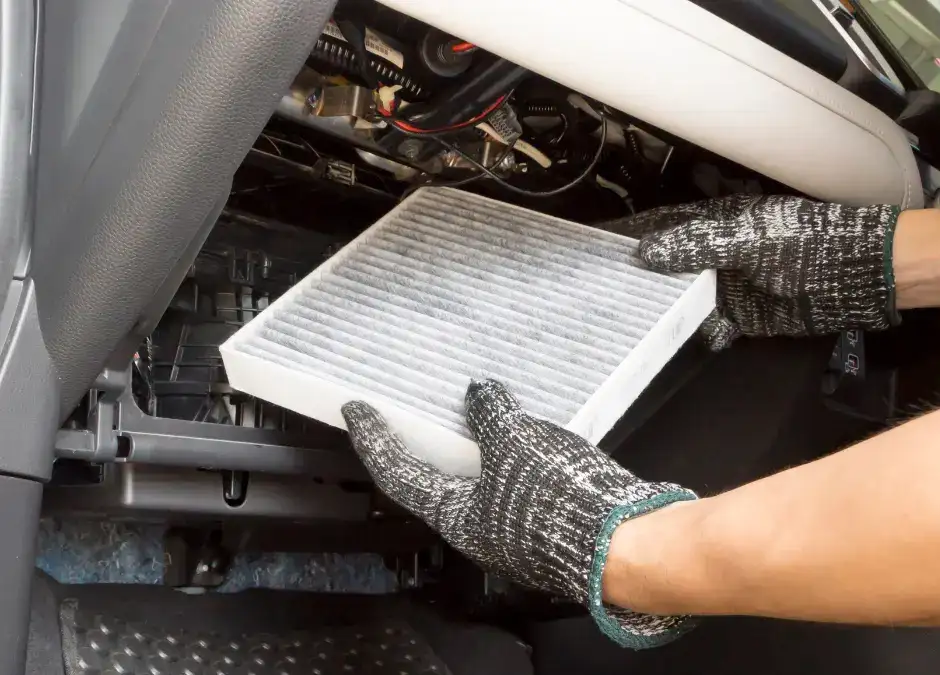
The cabin air filter does a completely different job. It sits in the HVAC system between the outside air intake and the cabin, filtering dust, pollen, mold spores, and other airborne particulates before they enter the passenger compartment through the vents. A clogged cabin filter restricts airflow through the climate system, which forces the blower motor to work harder to push the same volume of air into the cabin. Over time, that added strain can wear on the blower motor, and in the shorter term it means the AC and heat simply don’t perform as well as they should, particularly at lower fan settings where airflow is already more limited.
Marcus Delillo, a service technician at our Morgantown location, says both filters come up regularly during routine inspections, and the condition he sees them in is often worse than owners expect. “Spring is the one that gets me every time. We’ll pull a cabin filter that’s been in there through a full West Virginia pollen season and it’s completely packed. Customers are surprised because the AC still seemed to be working okay, but when you put a new filter in and they feel the airflow difference, they immediately understand why it matters. The engine filter is the same story. People push it to 30,000 miles when they’re driving through construction zones every day and the filter is done at 15,000.” He recommends that Morgantown drivers check both filters annually at minimum rather than relying solely on mileage intervals, since local driving conditions regularly accelerate how quickly both get used up.
What Happens When Each Filter Is Neglected
The consequences of neglecting each filter are different in kind and in cost, but both are worth understanding before the decision is made to push the interval.
A neglected engine air filter on a turbocharged VW creates a chain of consequences that starts with reduced performance and ends with accelerated wear on expensive components. Restricted airflow reduces the efficiency of the combustion cycle, which shows up first as slightly reduced fuel economy and throttle response. Because those symptoms are gradual, they’re easy to attribute to other causes or simply accept as normal. The turbocharger meanwhile is compensating for restricted airflow by working harder to maintain boost pressure, generating more heat in the process. Heat is the primary accelerant of turbo wear, and a turbo that’s been running hot due to restricted airflow for tens of thousands of miles has accumulated wear that a clean filter upstream would have prevented. Engine air filter replacement typically runs $30 to $60 for the filter itself, which makes it one of the most cost-effective services on the entire maintenance list relative to what it prevents.
The cost comparison on the engine filter makes the case clearly:
Neglected engine air filter leading to accelerated turbo wear:
- Engine air filter replacement deferred past 30,000 miles: $0 saved short term
- Turbocharger replacement due to heat-accelerated wear: $1,000 to $2,000
- Additional labor for associated hoses and seals during turbo replacement: $200 to $400
- Total cost of deferred engine filter: $1,200 to $2,400
Engine air filter replaced on schedule:
- Filter replacement every 15,000 to 20,000 miles in Morgantown driving conditions: $30 to $60 per interval
- Turbocharger running within normal temperature range throughout: $0 additional
- Total cost of timely filter replacement through 60,000 miles: $90 to $180
A neglected cabin air filter creates a different but still meaningful set of consequences. Restricted airflow through a clogged cabin filter forces the blower motor to work harder on every climate system cycle, which adds wear to a component that typically costs $200 to $400 to replace when it fails. Beyond the mechanical side, a cabin filter that’s been accumulating pollen, dust, and mold spores for an extended period can begin to circulate some of what it’s collected back into the cabin air, particularly when the filter becomes so saturated that its filtration effectiveness drops. For anyone in the vehicle with allergies or respiratory sensitivities, a degraded cabin filter is a health consideration as much as a maintenance one.
What Morgantown VW Owners Should Keep in Mind
A few straightforward habits keep both filters in good shape without requiring much effort:
- Check both filters annually rather than relying solely on mileage intervals. General guidelines suggesting engine filter replacement every 20,000 to 30,000 miles and cabin filter replacement every 15,000 to 25,000 miles are built around average driving conditions. Morgantown’s pollen seasons, active construction corridors, and winter road debris regularly push both filters past their useful life before those mileage marks are hit.
- Pair filter checks with seasonal service visits. Spring is the most important time to check the cabin filter after a full pollen season, and fall is a natural time to check the engine filter after a summer of construction dust and heat. Building both into a twice-yearly rhythm means neither gets overlooked between oil changes.
- Don’t assume the AC is working fine because it’s blowing cold air. A clogged cabin filter reduces airflow volume without necessarily affecting temperature, which means the system can feel like it’s cooling normally while working significantly harder than it should be and delivering less air into the cabin than a clean filter would allow.
Both filters are among the simplest and least expensive services on any VW’s maintenance schedule, and they’re also among the most consistently overlooked. The math on staying current is straightforward: a combined $60 to $120 in filter replacement at the right interval prevents several hundred to several thousand dollars in downstream repairs on components that were only failing because the filters protecting them weren’t doing their job anymore.
If it’s been more than a year since either filter was checked, or you’ve noticed reduced airflow from your vents or a slight drop in throttle response, stop by and let us take a look. The team at Volkswagen Morgantown, located at 401 Mary Jane Wood Circle, Morgantown, WV 26501, can inspect both filters, replace what’s needed, and make sure your VW’s air systems are working the way they should heading into the next season.

0 comment(s) so far on Cabin & Engine Air Filters: The Overlooked VW Service Item