




Carbon Buildup in VW TSI Engines: Why Morgantown Drivers Need Direct Injection Cleaning
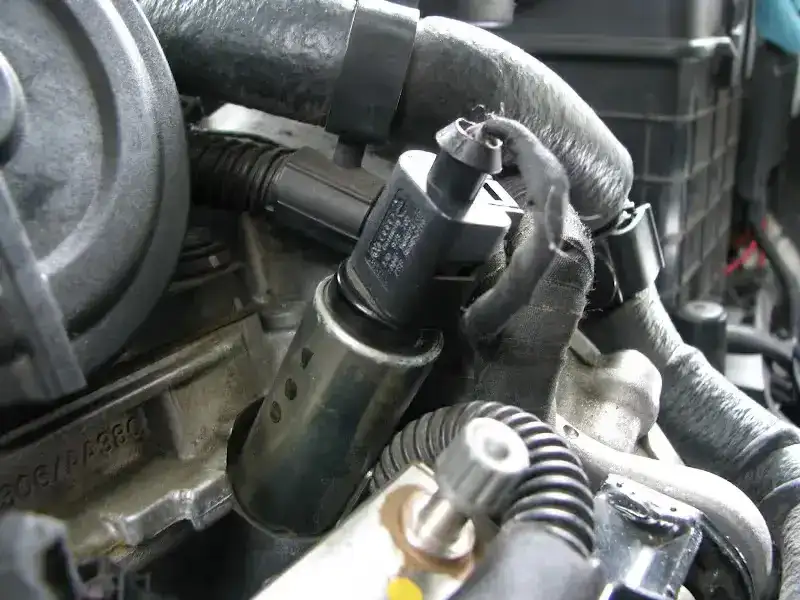
If you drive a VW Jetta, Golf GTI, Tiguan, or Atlas in Morgantown, your engine is accumulating carbon deposits on its intake valves right now. Not because something is wrong with the engine, and not because of anything you’re doing incorrectly. It’s a physical consequence of direct injection technology that affects every TSI engine ever made, and the stop-and-go driving patterns that define a Morgantown commute through the WVU corridor on Beechurst Avenue, up the hills toward Suncrest, or along the constant congestion of University Avenue accelerate that accumulation faster than highway driving ever would.
Understanding why direct injection creates this problem, what it looks like when the deposits become significant enough to affect performance, and what the cleaning service actually involves gives Morgantown VW owners the context they need to make a straightforward maintenance decision before the symptoms arrive.
Why TSI Direct Injection Creates a Carbon Problem Port Injection Never Had
In a traditional port-injected engine, fuel is sprayed into the intake tract upstream of the intake valve. That fuel acts as a continuous solvent, washing the back face of each intake valve clean with every combustion cycle. The valve stays clean because fuel contacts it constantly.
In a direct-injection engine like every VW TSI, fuel is sprayed directly into the combustion chamber, bypassing the intake valves entirely. The intake valves still see crankcase oil vapor from the PCV system, combustion blowby gases, and other deposits that make their way into the intake stream, but now there is nothing to wash those contaminants off the valve surface. Instead, they bake onto the hot metal over thousands of heat cycles, hardening into a black, tar-like carbon layer that builds on the back face and stem of each intake valve.
That layer does not respond to fuel additives, detergent-enhanced gasoline, or any chemical you can add to the tank. Because fuel never contacts the intake valve in a direct-injection engine, no fuel-delivered cleaner can reach the deposits. The only effective removal method is mechanical cleaning, and the industry-standard approach is walnut blasting.
How Morgantown Driving Accelerates the Timeline
Carbon deposits accumulate on every TSI engine regardless of where the vehicle is driven, but the rate of accumulation is not uniform. Driving conditions that keep the engine from reaching and sustaining full operating temperature accelerate deposit formation because the engine never gets hot enough to partially volatilize the lighter components of the carbon layer.
Morgantown’s driving environment produces exactly those conditions for a significant portion of its VW-owning population:
- Short campus commutes that cover two or three miles before the engine has fully warmed up, common for anyone driving from the South Park or Evansdale neighborhoods to WVU facilities
- Stop-and-go congestion on University Avenue, Beechurst Avenue, and Don Knotts Boulevard, where the engine spends extended time at low RPM and low load rather than clearing deposits through sustained combustion heat
- Frequent cold starts through a Morgantown winter, which are among the most deposit-forming conditions a TSI engine encounters since the engine runs rich and cool for the first several minutes of each trip
- Hilly terrain throughout Monongalia County that keeps drivers in lower gears and at higher throttle demand from a stop, which loads the intake tract with PCV oil vapor at exactly the moments the valve temperatures are highest and most deposit-prone
None of those factors alone would dramatically compress the cleaning interval. In combination, they mean that a Morgantown TSI owner making primarily short campus and neighborhood trips may see performance-affecting deposits developing closer to 30,000 to 40,000 miles than the 50,000-mile figure often cited for vehicles driven primarily on the highway.
What Carbon Buildup Actually Does to Engine Performance
Intake valve carbon deposits are not a cosmetic issue. As they accumulate, they narrow the opening through which the engine draws air during each intake stroke, disrupting the airflow geometry the engine management system was calibrated to expect.
The effects progress in stages as deposits build:
- Light deposits under approximately 40,000 miles on a well-maintained engine rarely produce noticeable symptoms, though subtle power reduction may be measurable on a dyno even if the driver doesn’t feel it
- Moderate deposits in the 1 to 3 millimeter range, typical between 40,000 and 70,000 miles in stop-and-go usage, produce rough cold idle that is noticeably worse than the engine exhibited when newer, hesitation on cold throttle application, and occasional misfires at idle
- Heavy deposits beyond 3 millimeters create measurable power loss across the RPM range, persistent rough idle, cold-start misfire codes that return after the ignition system has been ruled out, and in some cases increased oil consumption as the restricted airflow affects combustion dynamics
The progression is gradual, which is both the challenge and the danger. Drivers adapt to the changes without realizing how far the engine has drifted from its original performance baseline. Many VW owners who have had walnut blasting performed on a heavily deposited engine describe the power delivery and throttle response afterward as returning to what the car felt like at 40,000 or 50,000 miles less mileage.
What Walnut Blasting Involves
Walnut blasting is the industry-standard service for intake valve carbon removal on direct-injection engines, and it is the method Volkswagen specifically endorses for this service on TSI engines. The name describes the process: ground walnut shells are delivered under compressed air through the intake ports to physically blast carbon deposits off the valve surfaces. Walnut shells are hard enough to remove baked-on carbon but soft enough not to damage the aluminum port walls or the valve seats and stems.
The service requires removing the intake manifold to access the intake ports directly and using a shop vacuum simultaneously to capture the spent media and dislodged carbon. A thorough service covers all intake valves across all cylinders. A borescope inspection before the service documents the actual deposit condition on the valves, and a post-cleaning inspection confirms the results. The service typically takes two to three hours at a certified VW dealer and costs in the range of $400 to $650 depending on the model and the extent of the buildup.
At approximately 50,000-mile intervals for a stock VW driven in normal conditions, or closer to 30,000 to 40,000 miles for Morgantown-pattern short-trip and stop-and-go use, walnut blasting is a scheduled maintenance service rather than a repair. The distinction matters: addressing carbon buildup at the maintenance stage is a straightforward cleaning. Allowing it to progress to the point of persistent misfires and fault codes turns it into a diagnostic and repair situation with higher labor costs and the possibility of secondary damage.
When to Schedule a Borescope Inspection
A borescope inspection allows a factory-trained VW technician to visually assess deposit accumulation on the intake valves without removing the intake manifold. It is the right starting point for any Morgantown VW owner who:
- Is past 40,000 miles on a vehicle that has been driven primarily on short urban and campus trips
- Has noticed rougher cold idle than the vehicle exhibited earlier in ownership
- Has experienced a misfire code, particularly P0300 through P0304, that returned after ignition system components were checked
- Has never had intake valve cleaning performed on a vehicle with more than 60,000 miles
The inspection itself is quick and confirms whether the walnut blasting service is appropriate at the current mileage or can reasonably wait until the next service interval.
The factory-trained service team at Volkswagen Morgantown, located at 401 Mary Jane Wood Circle, Morgantown, WV 26501, performs borescope inspections and walnut blasting intake cleaning services with the VW-specific equipment and technical training this service requires. Schedule your inspection and find out exactly where your engine stands before the symptoms tell you.

0 comment(s) so far on Carbon Buildup in VW TSI Engines: Why Morgantown Drivers Need Direct Injection Cleaning