




Handling Winter Slush on Route 7: Shock and Strut Inspections to Handle Freeze-Potholes Around Morgantown
Key Takeaways
- Freeze-thaw cycles create potholes fast: Water seeps into pavement cracks, freezes, expands, and leaves craters that punish suspension parts every time a wheel drops in.
- Worn shocks and struts hurt more than comfort: Weak dampers lengthen stopping distances, reduce tire grip on slushy pavement, and make the car harder to control in an emergency.
- Tires and alignment suffer first: Cupped tread, uneven wear, and a steering wheel that sits off-center often point back to a tired suspension.
- An inspection is the cheapest fix: Catching a leaking strut or a cracked mount early costs far less than replacing wheels, tires, and control arm components after a hard hit.
Every Morgantown driver knows the sound. You are rolling along Route 7 with slush spraying off the tires, and a hidden pothole slams the wheel hard enough to rattle the whole car. One hit might not break anything, but a winter of them adds up. A shock and strut inspection costs a small fraction of what it takes to replace a bent wheel, a ruined tire, and the suspension parts that went with them.
How Freeze-Thaw Cycles Create Potholes Around Morgantown
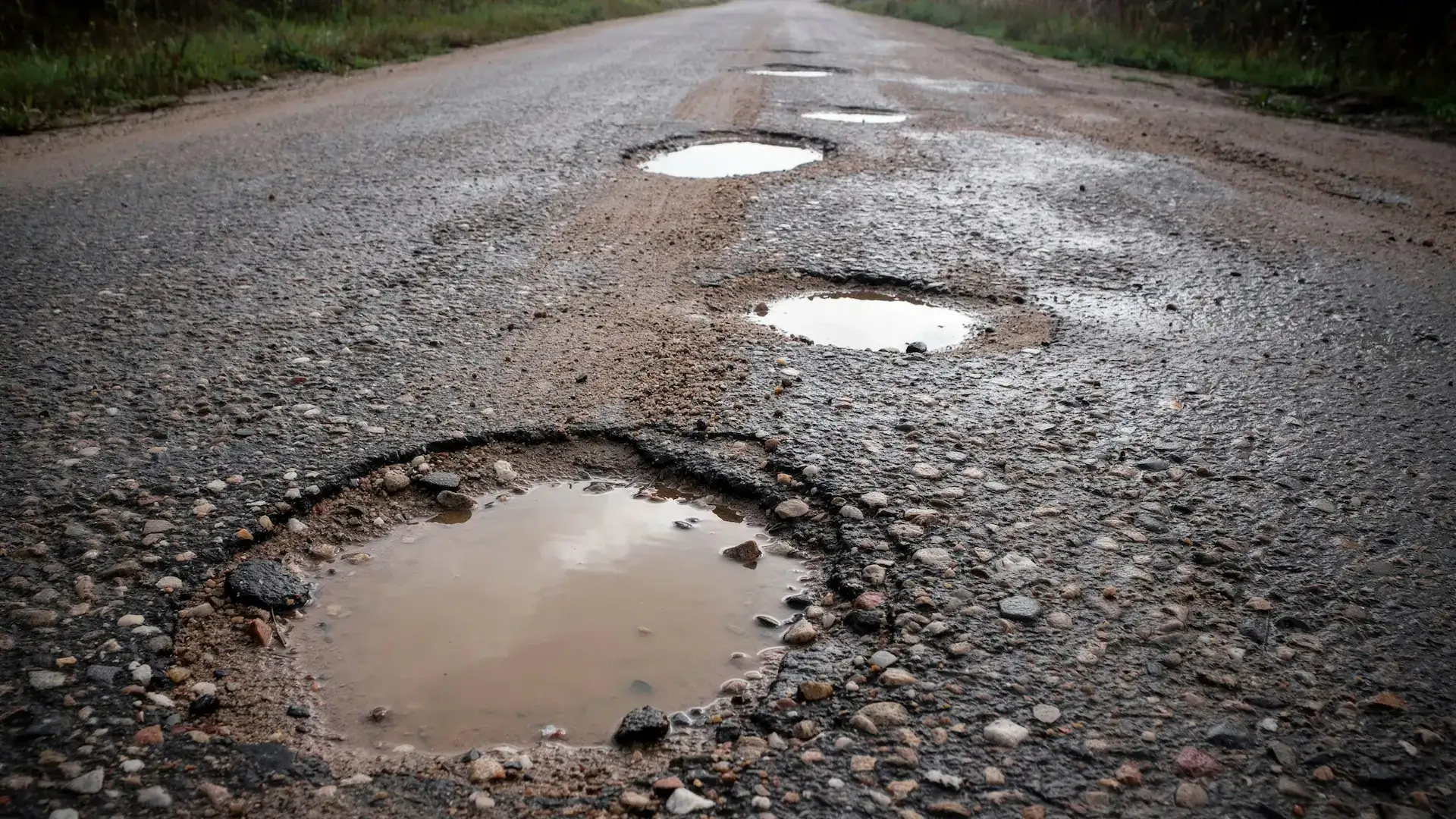
Potholes are a product of weather and traffic working together. Rain and melting snow seep into small cracks in the asphalt. When temperatures drop overnight, that water freezes and expands, widening the crack and loosening the pavement around it. When the day warms up, the ice melts and leaves a void beneath the surface. The next few vehicles to roll over it break the weakened pavement apart, and a pothole is born.
North Central West Virginia is nearly ideal for this process. Temperatures in Monongalia County regularly bounce above and below freezing within the same day, especially from late December through March. Heavy traffic on the Route 7 corridor, the Mileground, and the connectors to I-79 and I-68 adds the load that finishes the job. Road crews work hard to patch damage, and you can follow current conditions and closures through the West Virginia 511 traveler information service, but cold patches often wash out and new holes appear within days.
Slush makes things worse. A wet, gray surface hides the edges of a pothole until the tire is already in it, and standing water can make a deep hole look like a shallow puddle.
What a Pothole Does to Your Volkswagen’s Suspension
Your Volkswagen’s suspension is a system of springs, dampers, mounts, bushings, and linkages. Springs support the vehicle’s weight, while shocks and struts control how quickly the springs compress and rebound. Without good damping, a car would keep bouncing after every bump.
Most current Volkswagen models, including the Jetta, Taos, Tiguan, and Atlas, use a strut-type front suspension. A strut does two jobs at once. It dampens motion and it forms part of the structure that holds the wheel in position, which is why it matters so much to both ride quality and alignment. When a wheel drops into a pothole, the impact travels up through the strut, into the mount, and across the body.
Repeated hard hits wear the internal seals and valving in a damper, and a leaking unit loses its ability to control motion. Impacts can also crack strut mounts, split rubber dust boots, damage bump stops, and bend control arms or tie rods. Even when nothing looks broken, the cumulative effect can leave a suspension that is noticeably softer and less stable than it was in the fall.
Warning Signs Your Shocks and Struts Need Attention
Suspension wear creeps up slowly, and most drivers adjust to it without realizing how much has changed. Watch for these signs after a rough winter stretch:
- Bouncing after bumps: The car keeps rocking or floating after crossing a dip instead of settling quickly.
- Nose dive when braking: The front end drops sharply as you slow down, which can lengthen stopping distance.
- Clunks or knocks over rough pavement: A hollow knock from a corner often points to a worn mount, bushing, or link.
- Visible fluid on the strut body: An oily, wet shock or strut is a leaking one.
- Uneven or cupped tire wear: Scalloped patches on the tread suggest the tire is bouncing instead of staying planted.
- Pulling or an off-center steering wheel: A hard pothole strike can knock the alignment out of specification.
Any one of these is worth checking. Several together mean the suspension should be inspected before the next storm.
Why Worn Dampers Matter on Slushy Roads
Many people think of shocks and struts as a comfort item, but they play a real role in safety. A tire can only grip the road while it is in contact with it. When a damper is worn, the tire can bounce slightly over uneven surfaces, and each small bounce reduces the time the rubber is pressed against the pavement.
That matters most on winter surfaces. Slush, wet leaves of salt brine, and packed snow already reduce traction, so any loss of contact becomes more noticeable. Stability control and anti-lock brakes rely on the tires holding the road, so a car with weak dampers asks those systems to work harder. Winding sections near the Monongahela River and the steep hills around Morgantown also load the suspension heavily in corners and on downhill braking, which makes good damping even more valuable.
Worn suspension parts also shorten tire life. Cupped or feathered tread is expensive to fix because it usually means new tires, and the underlying suspension problem has to be corrected or the new tires will wear out the same way.
What a Winter Suspension Inspection Covers
A proper inspection looks at the entire system instead of just the shocks. A technician will typically raise the vehicle and check each damper for leaks and damage, then inspect strut mounts, bump stops, and dust boots for cracks and wear. Control arm bushings, ball joints, tie rod ends, and sway bar links are checked for play, since a worn joint can cause clunks that mimic a bad strut.
The tires and wheels are examined as well. Technicians look for bulges, sidewall damage, uneven wear patterns, and bent or cracked rims, all of which are common after a pothole strike. If the steering feels off or the tires show wear, an alignment check confirms whether the geometry is still within specification.
A bounce test on the lot is a quick screening tool, but it cannot replace a lift inspection. Many struts feel acceptable in a simple push test and still show leaks or worn mounts once the wheels are off the ground. If a damper or strut needs replacement, it is generally done in pairs on the same axle so the left and right sides behave the same way, and an alignment follows to protect the tires.
What Suspension Neglect Can Cost
Costs vary by model and by how much work is needed, but this overview shows how early attention compares with waiting:
- Suspension inspection: A modest, quick service that catches small problems before they spread.
- Alignment after a pothole strike: Usually a reasonable cost, and it protects a set of tires that can cost far more to replace.
- Strut or shock replacement in pairs: A larger repair, but one that restores control and stopping stability.
- Replacing damaged wheels, tires, and control arms after a hard impact: Often the most expensive outcome, and frequently the result of driving on a worn suspension through a rough winter.
Volkswagen Care maintenance plans, available through the dealership, can help owners plan for routine service and keep inspections on a regular schedule.
Driving Habits That Protect Your Suspension
A few habits reduce the damage from winter roads. Leave extra following distance so you can see pavement ahead and steer around damage when it is safe to do so. Slow down before a pothole instead of braking while you are in it, since braking compresses the front suspension and makes the impact worse. Keep tires inflated to the pressure listed on the driver’s door jamb, because underinflated tires are far more likely to suffer sidewall damage and bent wheels. Check pressure often in cold weather, since it falls with the temperature.
If you do hit a hard one, do not shrug it off. Pay attention to how the car feels over the next few miles, and have it inspected if you notice a new vibration, pull, or noise.
Get Your Volkswagen Ready for the Rest of Winter
Before the next freeze and thaw cycle chews up another stretch of Route 7, have your suspension checked so small issues do not become large ones. The service team at Volkswagen Morgantown, located at 401 Mary Jane Wood Circle, Morgantown, WV 26501, United States, can inspect your shocks, struts, tires, and alignment, and recommend only what your Volkswagen needs. You can schedule service online and head into the rest of the season with a suspension that is ready for whatever the roads throw at it.

0 comment(s) so far on Handling Winter Slush on Route 7: Shock and Strut Inspections to Handle Freeze-Potholes Around Morgantown