




High-Altitude Turbo Care: Maintaining peak boost for WV mountain driving
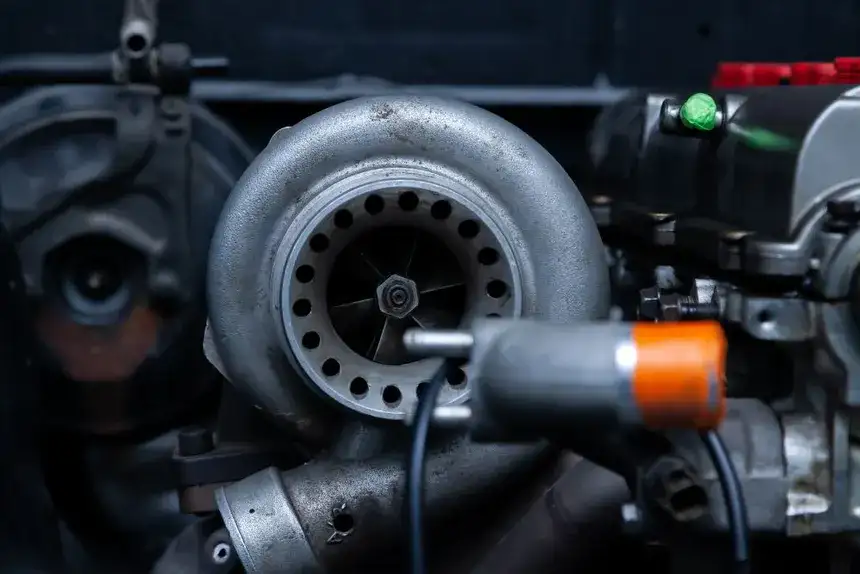
Last month, a Volkswagen Golf GTI came in from Elkins after its owner had noticed a gradual reduction in the confident pull he remembered from his first year of ownership on the grades of US-219 between Elkins and Morgantown. He had attributed the power reduction to normal engine aging and hadn’t connected it to a maintenance gap. When our technician completed a boost system diagnostic, the intercooler had accumulated a significant internal oil film from eleven months of PCV vapor exposure, the wastegate actuator showed carbon buildup affecting its response accuracy, and the turbocharger intake path had a partially collapsed silicone coupler that was limiting charge air volume under peak boost demand. The annual boost system inspection that would have caught all three items before they compounded into a noticeable power reduction? $180. The intercooler flush, wastegate cleaning, and coupler replacement required to restore full boost performance? $840.
That eleven-month gap between the GTI’s delivery and its first dedicated boost system inspection is the version of a turbocharger story we hear most consistently at Volkswagen Morgantown from drivers who use their VWs the way West Virginia mountain roads invite them to be used. The power reduction the Elkins owner experienced didn’t arrive suddenly. It built incrementally across eleven months of grade driving on US-219 and I-79, each month’s driving adding a small additional layer to the intercooler film, a small additional degree of carbon on the wastegate, a small additional distortion in the coupler wall, until the cumulative effect crossed the threshold where it was noticeable from the driver’s seat.
Morgantown and Monongalia County VW drivers operate their turbocharged engines in one of the most demanding boost environments in the Mid-Atlantic region. The elevation changes on I-79 between Morgantown and Fairmont, the sustained grades on WV-7 toward Elkins, the mountain two-lanes through Cheat Lake and the Coopers Rock area, and the altitude variation that West Virginia’s ridge-and-valley geography produces create a driving environment where the turbocharger is working harder, running hotter, and operating under conditions that accelerate the wear mechanisms that flat-terrain turbocharged driving simply doesn’t produce at the same rate.
This guide covers the specific ways that WV mountain driving stresses turbocharged VW engines, what the boost system components most affected by high-altitude grade driving require from a maintenance standpoint, and how to build the service approach that keeps peak boost performance intact across years of Morgantown and Monongalia County ownership.
How High-Altitude Mountain Driving Stresses VW Turbo Systems
Understanding why West Virginia mountain driving is specifically harder on turbocharged engines than flat-terrain driving requires a brief explanation of how turbochargers respond to altitude and load conditions, because the physics involved directly shape the maintenance requirements that WV owners face.
A turbocharger compensates for altitude-related air density reduction by spinning faster to compress a larger volume of thinner air to the same effective density the engine requires for efficient combustion. At sea level, the turbocharger reaches its target boost pressure relatively quickly from a standing boost request. At the elevation that characterizes Morgantown and the surrounding Monongalia County terrain, which sits between 900 and 1,500 feet with surrounding ridges considerably higher, the turbocharger compresses against a lower ambient pressure baseline, requiring slightly higher shaft speeds to achieve equivalent boost levels.
The practical consequence is that WV mountain driving keeps the turbocharger operating at higher shaft speeds for longer sustained periods than the same mileage driven on flat terrain would produce. Higher shaft speeds generate more heat at the bearing surfaces and in the compressor housing, accelerate the thermal cycling that stresses the wastegate actuator and its associated components, and increase the volume of hot charge air passing through the intercooler per unit time.
The Sustained Grade Load Problem
The specific characteristic of WV mountain driving that separates it most dramatically from urban stop-and-go driving or flat highway cruising is the sustained high-load demand that grade climbing produces. A driver climbing the grade on I-79 between Morgantown and Fairmont maintains a consistent throttle position and consistent boost demand for two to four minutes per climb, depending on traffic and speed. During that sustained climb, the turbocharger operates continuously at near-peak conditions without the brief unloaded recovery periods that urban driving and flat highway driving interweave naturally.
Sustained peak operation is the condition that most accelerates oil coking on turbocharger bearing surfaces, most stresses wastegate actuator components, and most taxes the intercooler’s heat rejection capacity. A turbocharger that makes thousands of brief boost excursions in urban driving accumulates wear differently and more slowly than one that makes hundreds of sustained two-to-four-minute high-load climbs on WV grades. The Morgantown commuter’s turbocharger ages in mountain time rather than flat-terrain time, and the service intervals that reflect that distinction protect the powertrain investment that mountain performance depends on.
Thermal Shock on WV Descents
The descent that follows every WV grade climb creates a thermal condition that flat-terrain driving doesn’t produce: a rapid transition from sustained high-load turbocharger operation to low-load or engine-braking deceleration that drops boost demand and turbocharger shaft speed quickly while the bearing surfaces retain significant residual heat.
This rapid thermal transition, from peak load to near-zero load in the time it takes to crest a ridge and begin a descent on WV-7 or US-250, creates a thermal shock cycle in the turbocharger’s aluminum compressor housing and the bearing cartridge that steel components adjacent to them. Repeated across years of WV mountain driving, these thermal shock cycles accelerate fatigue in the materials and connections that the turbo system depends on for its structural integrity.
The idle-down practice discussed in previous guides on turbocharged VW maintenance applies with particular relevance in WV mountain driving. A brief period of low-load driving or idle at the bottom of a long descent before parking or shutting down allows the turbocharger bearing temperature to moderate before oil circulation stops, reducing the thermal shock severity that repeated immediate shutdowns after descents produce.
The Boost System Components That WV Mountain Driving Affects Most
The VW turbocharged engine’s boost system is a collection of connected components that work together to deliver the compressed charge air the engine requires, and each component in that system has its own specific vulnerability to the mountain driving conditions Morgantown-area owners produce.
The Intercooler: Heat Management Under Mountain Load
The intercooler sits between the turbocharger outlet and the engine intake, and its function is to cool the compressed charge air that the turbocharger produces before it enters the combustion chamber. Cooler, denser charge air produces more efficient combustion and reduces the detonation risk that hot charge air creates in a high-compression turbocharged application.
In sustained mountain driving, the intercooler operates at higher average temperatures than urban or highway driving produces because the sustained boost demand keeps a continuous stream of hot compressed air flowing through it without the recovery periods that interrupted boost demand allows. Over time, the PCV system’s oil vapor, which enters the charge air stream upstream of the intercooler, deposits a progressive film on the intercooler’s internal surfaces that reduces its heat transfer efficiency.
This oil film accumulation is the most consistent finding on Morgantown-area VW intercoolers at annual inspection, and its effect is directly measurable: a film-coated intercooler delivers charge air to the engine at higher temperature than a clean intercooler would under identical boost conditions, reducing combustion efficiency and peak power output in proportion to how thick the film has grown. The intercooler flush that clears the film costs $180 to $240 and restores the charge air temperature that the engine management system’s fuel maps were calibrated around.
The Wastegate Actuator: Precision Under Thermal Stress
The wastegate is the valve that regulates how much exhaust gas bypasses the turbocharger turbine, controlling boost pressure by modulating the energy available to spin the turbocharger shaft. The wastegate actuator is the electromechanical component that positions the wastegate valve based on the boost control signals from the engine management system.
In WV mountain driving, the wastegate actuator cycles more frequently and under higher thermal loads than flat-terrain driving produces, because the boost control system is continuously managing boost pressure against the varying load demands of grade climbing and descent. Carbon accumulation on the wastegate valve and actuator mechanism from sustained high-temperature exhaust exposure gradually reduces the precision of wastegate positioning, causing the turbocharger to deliver boost pressure that varies slightly from the target value the engine management system requests.
The performance effect of degraded wastegate precision is exactly what the Elkins GTI owner experienced: not a dramatic power loss but a gradual reduction in the confident, linear pull that characterizes a properly boosted TSI engine on a grade climb. The engine is producing boost. It’s just not producing precisely the boost the management system intended, and the cumulative effect across months of mountain driving is the gap between what the driver remembers and what the car currently delivers. 🔧
Charge Pipes and Silicone Couplers
The charge air path between the turbocharger compressor outlet, the intercooler, and the engine intake manifold uses a combination of aluminum pipes and silicone couplers that accommodate the thermal expansion differential between the turbocharger’s operating temperature and the cooled charge air temperature downstream of the intercooler.
The silicone couplers in this path are the most temperature-sensitive components, and they operate in a particularly demanding thermal zone in WV mountain driving where the temperature differential between the hot charge air they carry during a grade climb and the ambient temperature during the subsequent descent creates repeated expansion and contraction cycles. Silicone couplers that have been through several years of WV thermal cycling develop micro-cracking and wall softening that allows partial collapse under peak boost pressure, reducing the effective charge air volume that reaches the engine during maximum demand events.
A partially collapsed charge coupler produces a boost system that performs adequately at moderate demand but falls short of its peak output when the driver calls for full boost on a grade climb on I-79 or WV-7, which is precisely when Morgantown drivers expect the engine to perform at its best.
Warning Signs Your VW’s Boost System Needs Mountain-Driving Attention
These symptoms on Morgantown and Monongalia County VW turbocharged models warrant a boost system inspection at our Mary Jane Wood Circle location rather than an attribution to normal aging or WV road conditions.
A gradual reduction in the confident grade-climbing pull that you remember from the first year of ownership is the most consistent early indicator that one or more boost system components have accumulated enough degradation to affect peak performance. This symptom is easy to normalize because it develops slowly and the vehicle continues to perform adequately. It’s the boost system’s way of communicating that something in the charge air path is no longer at its designed efficiency.
A boost gauge or performance display reading that shows peak boost pressure lower than the vehicle’s specification under full-throttle grade climbing conditions, compared to what the same display showed during initial ownership, indicates a boost system integrity concern that the diagnostic assessment will identify specifically.
A fluttering or surging sensation at peak boost demand during aggressive grade climbing on I-79 or WV-7 indicates inconsistent boost pressure delivery from a wastegate control issue, a charge path leak, or an intercooler restriction that is preventing the system from maintaining stable boost pressure under sustained demand.
Blue or gray smoke from the exhaust during the first minute of a grade climb that wasn’t present when the vehicle was newer indicates increased oil consumption from turbocharger seal wear that mountain driving’s sustained high-load operation has accelerated beyond what normal urban driving would produce at equivalent mileage.
A whistle or chirp in the charge air path under boost that changes with boost pressure level indicates a charge pipe coupler or connection that has developed a small leak allowing pressurized charge air to escape between the turbocharger and the intake manifold.
Fuel economy reduction on familiar mountain routes that has developed gradually without a change in driving behavior indicates combustion efficiency loss from charge air temperature increase caused by intercooler film accumulation reducing heat transfer effectiveness. 🔧
The Annual Boost System Inspection: What It Covers and What It Costs
A comprehensive annual boost system inspection at the Mary Jane Wood Circle location addresses the VW turbocharged engine’s charge air path as a complete system rather than responding to individual components after they produce symptoms. The inspection covers the intercooler internal surface condition and heat transfer efficiency, the wastegate actuator response accuracy under simulated boost control signals, the charge pipe and coupler integrity under pressurization, the turbocharger inlet and outlet seal condition, and the PCV system’s contribution to intercooler film accumulation rate.
The inspection uses VW’s diagnostic system to read boost pressure delivery accuracy, intercooler efficiency estimates from charge air temperature data, and wastegate position error logs that identify whether the actuator is responding precisely to control signals or has developed the response degradation that mountain driving thermal cycling produces.
Cost comparison for proactive annual boost system inspection versus reactive repair:
Proactive annual boost system inspection:
- Comprehensive boost system inspection with diagnostic data review: $180
- Intercooler flush if film accumulation warrants: $180 to $240
- Wastegate cleaning and actuator calibration if carbon buildup found: $160 to $220
- Charge coupler replacement if wall softening detected: $120 to $180
- Smart proactive total if all items apply: $640 to $820
Reactive approach after boost degradation becomes noticeable:
- Extended diagnostic to identify boost degradation source: $160 to $240
- Intercooler flush after significant film accumulation: $240 to $320
- Wastegate actuator replacement after precision loss exceeds cleaning threshold: $480 to $680
- Charge coupler replacement after partial collapse affects peak boost: $120 to $180
- Turbocharger bearing inspection if oil coking has progressed: $280 to $420
- Total reactive cost: $1,280 to $1,840
Your savings from a proactive annual boost system inspection: $460 to $1,020. On a turbocharged VW driven in WV mountain conditions, the gap between proactive boost system care and reactive repair is among the most consistent and most significant cost differentials our service team at the Mary Jane Wood Circle location documents across the full service calendar.
“Mountain driving and turbochargers have a specific relationship that flat-terrain VW owners don’t encounter at the same intensity,” says Marcus Hensley, Master VW Powertrain Technician at the Mary Jane Wood Circle location. “The grades on I-79 and WV-7 keep the turbo in a sustained high-load condition that urban driving never produces for that duration. The intercooler film, the wastegate carbon, the coupler fatigue, they all accumulate faster in mountain time than in city time. An annual inspection that catches these items early is what keeps the GTI or Tiguan pulling through Coopers Rock the same way it did the day you drove it off the lot. Skip a few years of that inspection in this environment and the car will tell you about it, usually on a grade climb when you want it most.”
Your 30-Day Boost Health Plan for Morgantown VW Drivers
This week: Do a deliberate boost performance assessment on a familiar grade climb, specifically the southbound I-79 grade between the Westover interchange and the Sabraton area or the climb on WV-7 east of Morgantown toward Cheat Lake. At full throttle in Sport mode or with the transmission held in a lower gear to keep the engine in its peak boost range, note the character of the acceleration through the grade. A healthy boost system delivers a linear, confident pull that builds progressively through the RPM range. A boost system with accumulation or restriction delivers a pull that feels blunted at the top end or hesitates before building, as if the engine is working harder than the acceleration warrants. Your subjective assessment of current grade performance against your memory of the vehicle’s first-year behavior is the most useful starting point for the boost system conversation.
Within two weeks: Check your service history for any record of an intercooler inspection or charge system assessment. If your VW has more than 20,000 miles of Morgantown and Monongalia County mountain driving without a dedicated boost system inspection, you are in the window where the inspection delivers the most value. The intercooler film, wastegate carbon, and coupler condition findings that typically appear between 20,000 and 40,000 miles of WV mountain driving are all in the range where cleaning and adjustment addresses them effectively. Past 50,000 miles of uninspected mountain driving, the same findings are more likely to require component replacement alongside cleaning.
By month’s end: Schedule your annual boost system inspection at the Mary Jane Wood Circle location and ask specifically for the mountain-driving turbo inspection protocol rather than a standard engine service. Our VW powertrain-certified technicians will complete the full boost system assessment described above, use VW’s diagnostic system to review boost delivery accuracy data, and give you a specific and documented picture of your charge air system’s current condition. Bundling the boost inspection with your next oil service makes the appointment efficient and ensures both the engine lubrication and the boost system performance are addressed simultaneously as the connected systems they are.
These three steps take less than an hour of your actual time outside the service appointment and create the performance baseline that allows WV mountain driving to continue delivering what it promises from a 268-hp Tiguan or a Golf GTI rather than gradually settling into something less than what the engineering was built to provide.
West Virginia’s mountain roads are one of the genuine rewards of owning a turbocharged Volkswagen in this region, and the performance that I-79 grade climbs and WV-7 mountain runs reveal in a properly maintained TSI engine is the kind of driving experience that makes the ownership worthwhile. Protecting that experience through the annual boost system attention that WV mountain driving specifically requires is a straightforward commitment with a return that every Morgantown grade climb delivers.
Schedule Your Boost System Inspection Today
The Elkins GTI owner from the opening had his intercooler flushed, his wastegate cleaned and recalibrated, and his collapsed coupler replaced in a single appointment at our Mary Jane Wood Circle location. He drove back to Elkins on US-219 with the pull he remembered from his first year of ownership fully restored, set an annual boost inspection reminder for every October before the winter mountain driving season intensifies, and has not missed that appointment since. The grade climbing confidence that made him choose the GTI is intact, and the inspection that preserves it is on his calendar as a permanent fixture of Morgantown VW ownership.
At Volkswagen Morgantown, our VW powertrain-certified technicians perform boost system inspections with the diagnostic capability, mountain-driving context, and TSI-specific expertise that WV turbocharged ownership requires. Whether you’re noticing a gradual reduction in grade-climbing confidence, approaching the mileage window where boost system inspection delivers its highest value, or want a documented baseline of your charge air system’s condition before another WV mountain driving season begins, we’ll give you an honest assessment and a clear service plan.
Schedule your boost system inspection today by contacting our service department or booking online. You’ll find us at 401 Mary Jane Wood Circle, Morgantown, WV 26501.
Proper boost system maintenance preserves the turbocharged performance that defines the VW driving experience on West Virginia mountain roads, protects the charge air components that high-altitude grade driving stresses more aggressively than any other driving environment, and ensures every grade climb on I-79 and every mountain run on WV-7 ahead is backed by a turbo system performing at the peak it was engineered to deliver. That is what annual boost system care on a WV mountain VW looks like.

0 comment(s) so far on High-Altitude Turbo Care: Maintaining peak boost for WV mountain driving