




ID. Buzz & Appalachian Grades: How the new electric microbus handles WV’s 10% inclines and where to find high-speed chargers in North Central WV
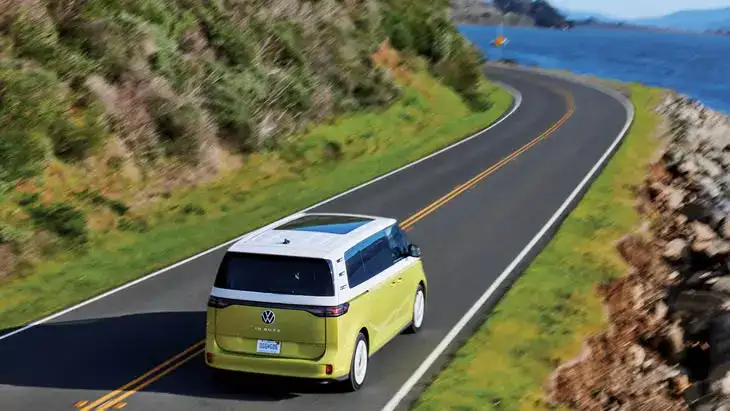
A Volkswagen ID. Buzz owner came into our service bay last month after an anxiety-inducing experience on US-33 east of Morgantown heading toward Elkins. He had left with a full charge and no navigation-planned charging stop, underestimating how significantly the sustained 8 to 10 percent grades through the Monongahela National Forest approaches would draw down his battery compared to his flat-road range estimates. He made it back to Morgantown with 6 percent remaining after an unplanned stop at a Level 2 charger in Buckhannon that added 45 minutes to his trip. Pre-trip route planning through the ID. Buzz navigation system with charge stop integration would have identified the correct charging stop in advance and added zero unplanned time to the journey.
West Virginia is not a state where electric vehicle range estimates transfer directly from the window sticker to the road. The grades that define North Central WV driving, the climb on I-79 northbound out of Morgantown toward the Chestnut Ridge area, the sustained elevation changes on US-119 south toward Grafton, and the genuinely demanding grades on US-33 east toward Elkins and beyond, all consume battery energy at rates that are meaningfully higher than the flat-road assumptions behind EPA range ratings. For ID. Buzz owners in the Morgantown area, understanding exactly how the vehicle manages those grades and where reliable high-speed charging exists in the region is not optional background knowledge. It is the foundation of confident daily and long-distance use.
The ID. Buzz is a genuinely capable vehicle for West Virginia driving. Its dual-motor all-wheel-drive configuration, available in the US-spec version, produces torque characteristics that are well-suited to sustained grade climbing, and its regenerative braking system recovers meaningful energy on descents that a gasoline vehicle would simply dissipate as heat. What it requires in return is a more thoughtful approach to range planning and charging infrastructure than drivers in flatter states with denser charging networks need to develop. At Volkswagen Morgantown, we want every ID. Buzz owner in Monongalia County and the surrounding region to have the specific knowledge that makes this vehicle work confidently in Appalachian conditions.
How the ID. Buzz Handles West Virginia’s Sustained Grades
The ID. Buzz’s electric drivetrain has characteristics that make it genuinely well-suited to mountain driving in ways that are not always intuitive coming from a gasoline vehicle background. The electric motors deliver full torque from zero RPM, which means the vehicle never needs to downshift, hunt for a gear ratio, or build RPM before producing meaningful climbing force the way a turbocharged gasoline engine does. On the sustained grade of I-79 northbound between Morgantown and the Fairmont exit, the ID. Buzz maintains its pace with a directness and composure that gasoline vehicles in its size class cannot match.
The thermal management of the battery and drive motors under sustained high-load climbing is where the engineering matters most for WV use. Sustained grades like the 8 to 10 percent sections on US-33 east of Elkins draw continuous high current from the battery pack, which generates heat that the thermal management system must dissipate to maintain both performance and battery health. The ID. Buzz’s liquid-cooled battery system handles this substantially better than air-cooled competitors, but it does mean that consecutive hard climbs without adequate recovery time warm the pack more than flat-road driving does. The vehicle’s energy management system monitors pack temperature and adjusts output accordingly, which owners occasionally experience as a slight reduction in peak acceleration on the second or third significant climb of a demanding route.
What Appalachian Grades Actually Cost in Range
Understanding the specific range impact of WV’s grades is the most important practical knowledge an ID. Buzz owner in the Morgantown area can have. The EPA range rating for the ID. Buzz is calculated on a standardized driving cycle that does not include sustained 8 to 10 percent grades. Real-world range on a route that includes significant Appalachian climbing is meaningfully lower, and the difference is large enough to affect charging stop planning on any route that ventures east or south of Morgantown.
On relatively flat highway driving on I-79 between Morgantown and Fairmont, the ID. Buzz will perform close to its EPA range estimate at moderate speeds. The energy consumption per mile on that stretch is consistent with the flat-road assumptions behind the rating. The picture changes significantly on routes with sustained elevation gain. The drive from Morgantown east on US-33 toward Elkins gains approximately 1,200 feet of elevation over roughly 50 miles, and that elevation gain represents energy that the battery must supply and cannot recover through regenerative braking because the descent happens on the return trip rather than immediately after each climb. Planning for 20 to 30 percent reduced range on routes with significant net elevation gain relative to the EPA estimate is a reasonable and consistent rule of thumb for North Central WV driving in the ID. Buzz.
The descent side of that equation is where the ID. Buzz’s regenerative braking system offers a meaningful advantage. On the return trip from Elkins to Morgantown on US-33, or on the descent from Cheat Mountain on WV-92, the regenerative system can recover a substantial portion of the energy the climb consumed, and the B-mode driving setting that maximizes regenerative braking on descents is one of the most useful tools an ID. Buzz driver in WV has available. Using it consistently on significant descents can recover 15 to 25 percent of the energy the corresponding climb cost, which meaningfully changes the range arithmetic on out-and-back routes with significant elevation change.
Where to Find High-Speed Charging in North Central WV 🔌
The charging infrastructure reality in North Central West Virginia is improving but requires honest acknowledgment. The region does not have the charger density of urban markets or the interstate charging corridors of I-70 or I-76. What it does have is a set of reliable charging locations that, when incorporated into route planning, make the ID. Buzz genuinely usable for the driving patterns that matter most to Morgantown-area owners.
The most relevant charging locations for ID. Buzz owners based in Morgantown and the surrounding area currently include the following:
- Morgantown area: Multiple Level 2 charging locations near the WVU campus corridor and the Suncrest Towne Centre area, with DC fast charging available at select locations near the I-79 interchange. This is the home base for most Morgantown owners and where overnight and workplace charging covers the majority of daily use.
- Fairmont: DC fast charging available near the US-19 corridor, making the Morgantown to Fairmont corridor one of the more reliably served stretches in the region for ID. Buzz owners who travel that route regularly.
- Clarksburg and Bridgeport: Charging infrastructure near the US-50 and I-79 interchange area, serving owners who travel the I-79 corridor south of Fairmont and making day trips to Bridgeport and the surrounding Harrison County area manageable without range anxiety.
- Buckhannon: Level 2 charging available, which serves as a viable range extender stop for owners making the US-33 run toward Elkins, though the Level 2 speed means planning for a longer stop than a DC fast charger would require.
- Elkins: Growing charging availability near the downtown corridor, making the US-33 route from Morgantown to Elkins a viable day-trip corridor for owners who plan a meal or activity stop to coincide with the charging time.
- Weston and Sutton: Limited charging infrastructure currently, which makes US-19 south of Clarksburg and US-19 through Webster County routes that require careful pre-trip planning and conservative departure charge levels.
The practical implication of this infrastructure map is that ID. Buzz owners in Morgantown are well-served for the I-79 corridor and the routes toward Clarksburg and Fairmont, adequately served for US-33 east toward Elkins with appropriate stop planning, and should approach routes into the more rural southern and eastern portions of the region with conservative range planning and contingency awareness.
What Route Planning Costs vs. What Unplanned Stops Cost 💰
The investment in route planning for North Central WV ID. Buzz use is entirely time-based rather than financial, but the time arithmetic is worth understanding clearly:
- Pre-trip navigation planning with charge stop integration: 5 to 10 minutes before departure
- DC fast charging stop (planned, battery pre-conditioned): 20 to 35 minutes depending on starting state of charge
- Unplanned DC fast charging stop (cold battery, no pre-conditioning): 35 to 55 minutes
- Unplanned Level 2 charging stop (infrastructure limitation): 45 to 90 minutes depending on charge needed
- Range anxiety management driving (reduced speed to conserve range): Adds 15 to 40 minutes to typical WV mountain routes
Planned trip with navigation-integrated charge stop: Total added time 20 to 35 minutes
Unplanned trip with reactive charging stop: Total added time 60 to 130 minutes plus stress
The ID. Buzz navigation system’s charge stop integration pre-conditions the battery before arriving at the planned charger, which alone reduces charging time by 10 to 20 minutes compared to arriving cold. Using the system as designed converts WV mountain driving from an anxiety-producing exercise in range monitoring to a predictable, manageable experience.
A Morgantown Owner Who Mapped the Region Correctly
Sarah drives her ID. Buzz between her home near the WVU Coliseum area and her family’s property in Randolph County, a route that includes the full US-33 grade sequence east of Elkins. After her first trip using the navigation system’s charge routing, which planned a stop at the Elkins charging location timed to coincide with a lunch break, she described the experience as indistinguishable from a gasoline road trip in terms of predictability. The charge stop added 28 minutes to the route, she used it for lunch, and she arrived at her destination with 31 percent battery remaining. The return trip with the elevation recovery on the descent from the Randolph County highlands added back enough charge through regenerative braking that she arrived in Morgantown with 22 percent, well above the buffer she had originally planned for.
Warning Signs Your ID. Buzz Needs Attention Before a Mountain Route ⚠️
These indicators suggest the ID. Buzz’s battery or thermal management system needs a check before a demanding WV mountain trip:
Range estimate that has declined noticeably from early ownership: If your ID. Buzz is showing a significantly lower full-charge range estimate than it did when new, and the reduction is beyond the normal seasonal variation from temperature effects, a battery health check is appropriate before planning a route that pushes the range envelope on WV grades.
Regenerative braking that feels less strong than it used to: The ID. Buzz’s regenerative system should provide consistent, strong deceleration in B-mode on descents like the return from Cheat Bridge on WV-92. Reduced regenerative force can indicate a battery management or motor control issue that affects both energy recovery and range on mountain routes.
Battery that warms more quickly than expected on moderate grades: If the vehicle’s battery temperature indicator shows elevated temperatures on grades that previously produced no thermal response, the cooling system may need inspection before a more demanding route like US-33 east.
Charging speed that has declined at familiar DC fast charger locations: If sessions at the Morgantown or Bridgeport chargers that previously took 25 to 30 minutes are now taking 40 minutes or more without changes in starting state of charge, battery health or thermal management issues may be limiting charge acceptance rate.
Navigation range ring that shrinks more quickly than expected on grade sections: The ID. Buzz’s navigation system displays a range ring that updates in real time based on energy consumption. A ring that contracts unusually quickly on familiar grade sections of I-79 or US-119 is telling you the energy consumption rate is higher than the baseline and warrants investigation.
Reduced performance on the second or third significant grade of a route: Some power reduction on consecutive hard climbs is normal as the battery warms. Significant power reduction that affects the vehicle’s ability to maintain speed on grades that it handled without issue previously points to a thermal management system that needs service.
What Our Service Team Says
“The ID. Buzz is a remarkable vehicle on WV roads when owners understand what it needs from them. The two things I tell every new ID. Buzz owner in this area are: use the navigation for any route that goes east or south of Morgantown, and use B-mode on every significant descent. Those two habits alone transform the experience from stressful to straightforward. The vehicle is genuinely capable of handling Appalachian grades. It just asks for more thoughtful route planning than a gasoline vehicle does, and the navigation system does most of that work for you if you let it.” — Chris Alvarez, Lead Service Technician, Volkswagen Morgantown
When Good Planning Made a Demanding Route Routine
David commutes between Morgantown and a work site near Philippi on US-119 three days per week, a route that includes meaningful grade sections south of Grafton and a net elevation change that initially concerned him when he ordered the ID. Buzz. We worked with him before delivery to map the US-119 corridor, identify the Clarksburg and Buckhannon charging options as contingency points, and establish the departure charge level and B-mode usage pattern that would make the route consistent. After six months of that commute, he describes it as completely routine. His regenerative recovery on the return descents from the Barbour County highlands consistently returns 18 to 22 percent of the energy the southbound climb costs, and his charging stop pattern at the Clarksburg location covers the weekly energy balance without adding meaningful time to his schedule.
Your 30-Day ID. Buzz Mountain Route Plan
This week, open the ID. Buzz navigation system and plan a route to a destination at least 60 miles from Morgantown that includes significant grade sections, US-33 east toward Elkins or US-119 south toward Grafton are good choices. Let the system plan any charge stops rather than overriding them manually. Note the charge stop location it selects, the estimated state of charge at arrival, and the estimated departure charge after the stop. This exercise takes 10 minutes and builds familiarity with the navigation system’s charge integration before you need it on an actual trip.
Within two weeks, take that planned route as an actual drive with the navigation system active and B-mode engaged on all significant descents. Note your actual state of charge at the charge stop versus the navigation estimate, and your actual arrival charge at the destination versus the estimate. The ID. Buzz’s navigation system learns your driving pattern over time and its estimates become more accurate with each similar route. Your first drive of a new route will have the widest gap between estimated and actual. Subsequent drives of the same route will narrow that gap significantly.
By month’s end, schedule a pre-mountain-season battery and thermal management check at Volkswagen Morgantown if you have not had a full EV system inspection in the past 12 months. Our team can assess battery health against the current baseline for your mileage, verify the thermal management system is operating correctly for sustained high-load grade climbing, and confirm the charging system is accepting at its designed rate at the Morgantown DC fast charging locations. These steps take less than two hours and give you the system confidence to plan routes across North Central WV without the range anxiety that comes from uncertainty about how the vehicle will perform.
Schedule Your ID. Buzz Mountain Readiness Check at Volkswagen Morgantown
The owner who made it back from US-33 with 6 percent remaining and an unplanned 45-minute stop in Buckhannon now uses the navigation system’s charge routing on every trip that ventures east of Morgantown. His most recent Elkins run was planned, charged at the correct stop during dinner, and arrived home with 24 percent remaining. The difference between that trip and the first one was entirely in the planning, and the navigation system did the planning. The ID. Buzz is ready for Appalachian grades. Make sure you and the navigation system are working together before the next mountain route.
Visit us at Volkswagen Morgantown, located at 401 Mary Jane Wood Circle, Morgantown, WV 26501. Our service department is open Monday through Saturday. Schedule your ID. Buzz mountain readiness check online through our website or speak with one of our EV-trained advisors directly. We serve drivers from Morgantown, Star City, Westover, Granville, Fairmont, and throughout Monongalia County. West Virginia’s mountains are magnificent. Your ID. Buzz was built to handle them. Let us make sure it’s ready. ⚡

0 comment(s) so far on ID. Buzz & Appalachian Grades: How the new electric microbus handles WV’s 10% inclines and where to find high-speed chargers in North Central WV