




Is It Time to Replace Your Volkswagen Spark Plugs?
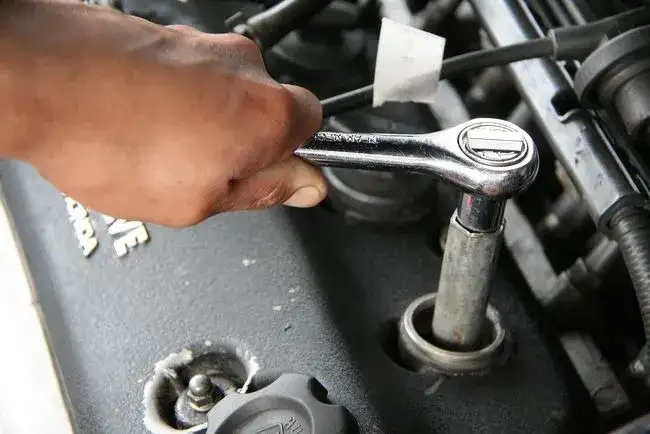
Last month, a Volkswagen Jetta came in from Westover after its owner had noticed a subtle roughness at idle and a hesitation on acceleration that had been developing for several months. He had attributed the roughness to a fuel quality issue and had been running premium gasoline through the tank hoping it would resolve on its own. When our technician pulled the spark plugs, all four were original at 71,000 miles with electrode wear and deposit buildup significant enough to require higher voltage to fire consistently, producing the incomplete combustion events the driver had been feeling as hesitation on the US-119 commute. The spark plug replacement at the 60,000-mile interval? $180. The spark plug replacement plus fuel system cleaning required to address the deposit accumulation from 11,000 miles of misfiring combustion? $420.
That 11,000-mile gap between when the plugs should have been replaced and when they actually were is one of the most consistently preventable situations our service team at Volkswagen Morgantown sees across Monongalia County ownership. And it almost always follows the same pattern: a driver who notices something subtle, attributes it to fuel or weather or the roads on WV-7, and keeps driving while the combustion efficiency loss accumulates quietly in the background.
Spark plug replacement is one of those maintenance items that generates almost no urgency until the consequences of deferring it become obvious enough to force a service appointment. The plugs don’t announce their wear with a dramatic failure. They degrade gradually, combustion quality declines incrementally, and fuel economy drifts downward slowly enough that most drivers adjust their expectations rather than connecting the change to a specific maintenance need.
Morgantown and Monongalia County driving conditions add specific context to this conversation. The elevation changes on I-79 between Morgantown and Bridgeport, the stop-and-go congestion on University Avenue during WVU event weekends, and the cold-start frequency of a full West Virginia winter all place demands on spark plug performance that accelerate the consequences of worn plugs relative to what moderate-climate, flat-terrain driving would produce from the same mileage.
What Spark Plugs Actually Do and Why Their Condition Matters
Most drivers understand spark plugs in the same general way they understand most engine components: they’re important, they wear out eventually, and replacement is part of owning a car. That understanding is correct but incomplete, and the gap between the general concept and the specific mechanics is where deferred plug replacement quietly costs Morgantown VW owners fuel economy and engine performance month after month.
A spark plug’s job is to deliver a precisely timed electrical arc across a calibrated gap between the center and ground electrode, igniting the compressed air-fuel mixture in the combustion chamber at exactly the right moment in the engine’s cycle. The timing, the arc energy, and the gap geometry all contribute to whether the combustion event is complete and efficient or partial and wasteful.
Fresh spark plugs with unworn electrodes and a gap within factory specification fire reliably at lower voltage with a consistent, complete combustion event. As the electrode wears, the gap widens beyond specification and the electrode surface becomes irregular from heat erosion and deposit accumulation. The ignition system compensates by supplying higher voltage to bridge the widened gap, but a worn electrode surface produces a less consistent arc, combustion becomes less complete, and the unburned fuel that exits the combustion chamber as exhaust represents both a fuel economy loss and a source of deposit accumulation in the exhaust system.
What VW’s Iridium Plugs Are Designed to Do
Volkswagen specifies iridium spark plugs for the TSI turbocharged engines that power the current Jetta, Golf GTI, Tiguan, Atlas, and Golf R. Iridium is a platinum-group metal that is significantly harder and more heat-resistant than the nickel alloys used in conventional plugs, which is why iridium plugs support the extended 60,000-mile replacement interval that VW specifies.
The iridium tip maintains its fine-wire electrode geometry across that interval, producing consistent arc characteristics and efficient combustion through the plug’s designed service life. What iridium’s durability doesn’t do is make the plug immune to the deposit accumulation, combustion chamber contamination, and electrode erosion that eventually affects every spark plug regardless of material specification.
At 60,000 miles in normal driving conditions, VW’s iridium plugs are at or approaching the end of their reliable service life. In West Virginia driving conditions, with the cold-start cycling, altitude-influenced combustion dynamics, and stop-and-go thermal stress that Morgantown driving introduces, the 60,000-mile interval is the appropriate benchmark rather than an overly conservative one. Extending beyond it produces diminishing combustion efficiency and increasing misfire risk with every additional thousand miles.
The Turbocharged Engine Context
The TSI engines in current VW models place more demanding conditions on spark plugs than naturally aspirated engines do. Turbocharging increases combustion chamber pressure and temperature, which accelerates electrode erosion and deposit formation relative to what the same mileage would produce in a lower-pressure naturally aspirated application. For Morgantown VW owners with the 2.0-liter TSI in a Tiguan or Atlas, the 60,000-mile interval is specifically calibrated for the turbocharged operating environment, and extending significantly past it in a high-demand application creates misfire risk that the extended interval was designed to prevent. 🔧
How West Virginia Driving Conditions Affect Spark Plug Service Life
The 60,000-mile spark plug replacement interval is written around typical driving conditions that don’t fully reflect what a Morgantown and Monongalia County driver experiences across a West Virginia ownership cycle.
Cold starts are the most significant accelerant of spark plug wear in the Morgantown area. Every cold-start combustion event produces more combustion byproduct deposit formation on plug surfaces than a warm-engine firing does, because the richer fuel mixture required during cold-start warm-up leaves more carbon residue on the electrode and insulator surfaces. Morgantown’s winter temperatures, which drop into the single digits through January and February, mean cold-start combustion conditions are more extreme than moderate-climate cold starts, and the frequency of cold starts in a suburban Morgantown driving pattern, where short trips on University Avenue and Patteson Drive are common, means the cumulative cold-start deposit load builds faster than a highway-dominated driving profile would produce.
The elevation changes on WV-7 toward Elkins and the grades on I-79 between Morgantown and Fairmont place sustained high-load demand on the TSI engine that generates combustion chamber temperatures significantly above what flat-terrain cruising produces. Sustained high-load combustion accelerates electrode erosion in ways that mileage alone doesn’t capture, which is why a Morgantown Tiguan owner driving 15,000 miles per year with significant elevation change driving may be approaching the practical end of plug service life before reaching 60,000 miles on the odometer.
The Stop-and-Go Combustion Quality Effect
University Avenue during WVU move-in weekend, the Patteson Drive and Monongalia Avenue corridor during home football weekends, and the daily congestion on WV-705 between Morgantown and Star City create driving conditions where the TSI engine cycles repeatedly between low-load idle combustion and moderate acceleration demand. This pattern produces incomplete combustion events more frequently than steady-state driving because the rapid throttle transitions challenge the fuel delivery system’s ability to maintain optimal mixture conditions through every combustion cycle.
Plugs that are approaching their wear limit handle these transitional combustion events less reliably than fresh plugs do, and the hesitation that Morgantown drivers often notice in stop-and-go traffic is frequently the first subjective sign that plug condition has crossed from acceptable to marginal.
An Atlas owner from Star City came in last fall after noticing her fuel economy had declined by approximately two miles per gallon over the summer without a clear explanation. She had 64,000 miles on the vehicle with no spark plug replacement on record. The plugs came out with electrode wear consistent with mileage at the upper end of their service life and deposit accumulation that indicated several thousand miles of sub-optimal combustion. Replacement with the correct VW-specified iridium plugs restored her fuel economy within two tanks and cost $220. The estimated fuel cost of the two MPG decline across the period it had been building represented $140 to $180 in additional fuel expense that proper interval maintenance would have prevented.
Warning Signs Your VW’s Spark Plugs Need Attention
Spark plug wear announces itself through performance and efficiency symptoms that are easy to normalize when they develop gradually. These are the signs worth treating as a prompt to schedule rather than a condition to monitor.
A hesitation or stumble on acceleration from a stop or when merging onto I-79 or US-119 that wasn’t present when the vehicle was newer is one of the earliest and most consistent symptoms of spark plugs producing inconsistent arc events during the high-demand transitional combustion phase of acceleration.
A rough or uneven idle at a stoplight, where the engine produces a subtle vibration or uneven note that wasn’t there previously, indicates cylinder-to-cylinder combustion inconsistency from plugs that are no longer firing reliably across all cylinders simultaneously.
Fuel economy decline that has developed gradually over several months without a clear change in driving habits or routes is one of the most consistent downstream effects of degraded combustion efficiency from worn plugs. The fuel economy loss from plugs approaching end of life is real but gradual, typically one to two MPG on a TSI engine, which is why it shows up as fill-up frequency drift rather than a dramatic change.
A check engine light with a misfire code, particularly P0300 through P0304 on a four-cylinder TSI engine, that appears under load or during cold starts indicates combustion events that are failing to complete reliably, a direct indication of plug condition that has crossed from marginal to requiring immediate attention.
Cold-start roughness that smooths out after a minute or two of running but has become more pronounced than it was in previous winters indicates plug condition that handles warm-engine combustion acceptably but struggles with the higher voltage requirements and richer mixture conditions of a cold West Virginia start. 🔧
Increased oil consumption between changes that wasn’t present earlier in the ownership cycle can in some cases be connected to combustion inefficiency from worn plugs, though this symptom warrants a broader diagnostic conversation rather than plug replacement alone.
What Spark Plug Replacement Actually Involves on a VW TSI Engine
The spark plug replacement procedure on VW’s four-cylinder TSI engines is straightforward on some configurations and requires additional disassembly on others depending on the specific engine generation and vehicle platform. On the EA888 engine found in the Golf GTI, Jetta GLI, and Tiguan, the ignition coils are accessed after removing the engine cover, and the plugs thread directly into the cylinder head below each coil.
The procedure includes removing each ignition coil and inspecting it for carbon tracking or boot degradation before reinstalling, torquing the new plugs to the precise specification that VW requires to prevent thread damage in the aluminum cylinder head, and applying anti-seize treatment to the plug threads on engines where the manufacturer specifies it. These details matter because overtorqued plugs in an aluminum head create a repair situation that costs significantly more than the plug service itself.
At our Mary Jane Wood Circle location, VW-certified technicians perform spark plug replacements with the correct iridium plug specification for your specific engine, the correct torque sequence, and a coil inspection that ensures the entire ignition system is contributing correctly to combustion quality after the service. The complete service runs $180 to $280 depending on your specific VW model and engine configuration, and it includes a post-replacement idle quality confirmation that verifies all cylinders are contributing evenly before the vehicle leaves the service bay.
The Cost Comparison: Timely Replacement vs. Extended Deferral
Proactive plug replacement at the 60,000-mile interval:
- Iridium spark plug set replacement with coil inspection: $180 to $280
- Fuel economy recovered at two MPG improvement on typical Morgantown driving volume: $120 to $180 annually
- Prevention of deposit accumulation requiring additional cleaning: $140 to $180 saved
- Smart proactive total net of fuel recovery: effectively $0 to $100 over the following year
Deferral to 70,000-75,000 miles with developing symptoms:
- Spark plug replacement at extended interval: $180 to $280
- Fuel system deposit cleaning from extended misfiring: $140 to $180
- Diagnostic time if misfire codes have been set: $120 to $160
- Fuel economy loss across extended deferral period: $120 to $180 in additional fuel cost
- Total deferred cost: $560 to $800
Your savings from replacing at the correct interval: $380 to $700, a figure that grows with every additional thousand miles of deferral past the service window.
“The spark plug conversation is one where I consistently hear that the car seems fine, so why spend the money,” says Jennifer Caldwell, Senior VW Service Advisor at the Mary Jane Wood Circle location. “What I tell owners is that ‘seems fine’ is exactly how worn plugs feel until they don’t. The hesitation on University Avenue, the rough idle at a stoplight, the fill-up that comes a little sooner than expected, those are the plugs telling you something. By the time the check engine light comes on with a misfire code, we’re usually into a more expensive conversation than a straightforward plug replacement would have been.”
Your 30-Day Spark Plug Check Plan
This week: Check your mileage against your service records and confirm when your spark plugs were last replaced. If you have more than 55,000 miles on your current set or cannot confirm when a replacement was performed, you are in the service window where proactive replacement delivers the most value. Also pay deliberate attention to your engine’s idle quality at the next several stoplights on University Avenue or Patteson Drive, and note whether cold-start behavior on the next few Morgantown mornings involves any roughness that smooths out after a minute of running. These observations cost nothing and give you useful starting context for the service conversation.
Within two weeks: Track your fuel economy over the next full tank by noting your odometer at fill-up and calculating miles per gallon from the pump volume. Compare this to your best recollection of fuel economy from one to two years ago on the same routes. A decline of more than one MPG that has no clear explanation in changed driving habits or routes is a signal that combustion efficiency has been affected by a maintenance item, and spark plug condition is among the first places to look at Morgantown mileage levels where plug wear is relevant.
By month’s end: Schedule your spark plug replacement at the Mary Jane Wood Circle location if your mileage and service history indicate the interval is due or approaching. Our VW-certified technicians will confirm the correct iridium plug specification for your specific engine, inspect each ignition coil during the replacement process, and perform a post-service idle quality check before returning the vehicle. Bundling the plug replacement with your next oil service or tire rotation keeps the appointment efficient and adds the ignition system to your documented service record in one visit.
These three steps take less than 20 minutes of your actual time and can identify whether your VW’s spark plugs are the source of a fuel economy or performance change that has been running in the background longer than it should have.
Spark plug replacement is one of the maintenance items where the cost of the service and the cost of deferring it are furthest apart, and that gap is widest on turbocharged VW engines operating in West Virginia driving conditions where cold starts, elevation demands, and stop-and-go thermal cycling all accelerate the consequences of plugs past their service life.
Schedule Your Spark Plug Service Today
The Westover Jetta owner from the opening had his plugs replaced and his fuel system cleaned in a single appointment at our Mary Jane Wood Circle location. The hesitation on US-119 resolved within the first week of driving, the idle quality returned to what he remembered from the vehicle’s first year, and his fuel economy recovered to its previous baseline within two tanks. He set his next plug replacement reminder at 120,000 miles and hasn’t thought about his ignition system since.
At Volkswagen Morgantown, our certified VW technicians perform spark plug replacements with the correct iridium specifications, proper torque procedures, and coil inspection protocols that VW’s TSI engines require. Whether your mileage indicates the interval is approaching, you’re already past it with developing symptoms, or you simply want a confirmed baseline on your ignition system’s current condition, we’ll give you an honest assessment and a clear service recommendation.
Schedule your spark plug service today by contacting our service department or booking online. You’ll find us at 401 Mary Jane Wood Circle, Morgantown, WV 26501.
Proper spark plug maintenance preserves the combustion efficiency your TSI engine was designed to deliver, protects the fuel economy that West Virginia driving conditions already challenge, and ensures every mile on Monongalia County roads is backed by an ignition system performing at the standard Volkswagen engineering intended. That is what staying on the spark plug interval delivers.

0 comment(s) so far on Is It Time to Replace Your Volkswagen Spark Plugs?