




Morgantown Commuter Care: Maximize Your VW ID.4 Range with Certified Battery Service
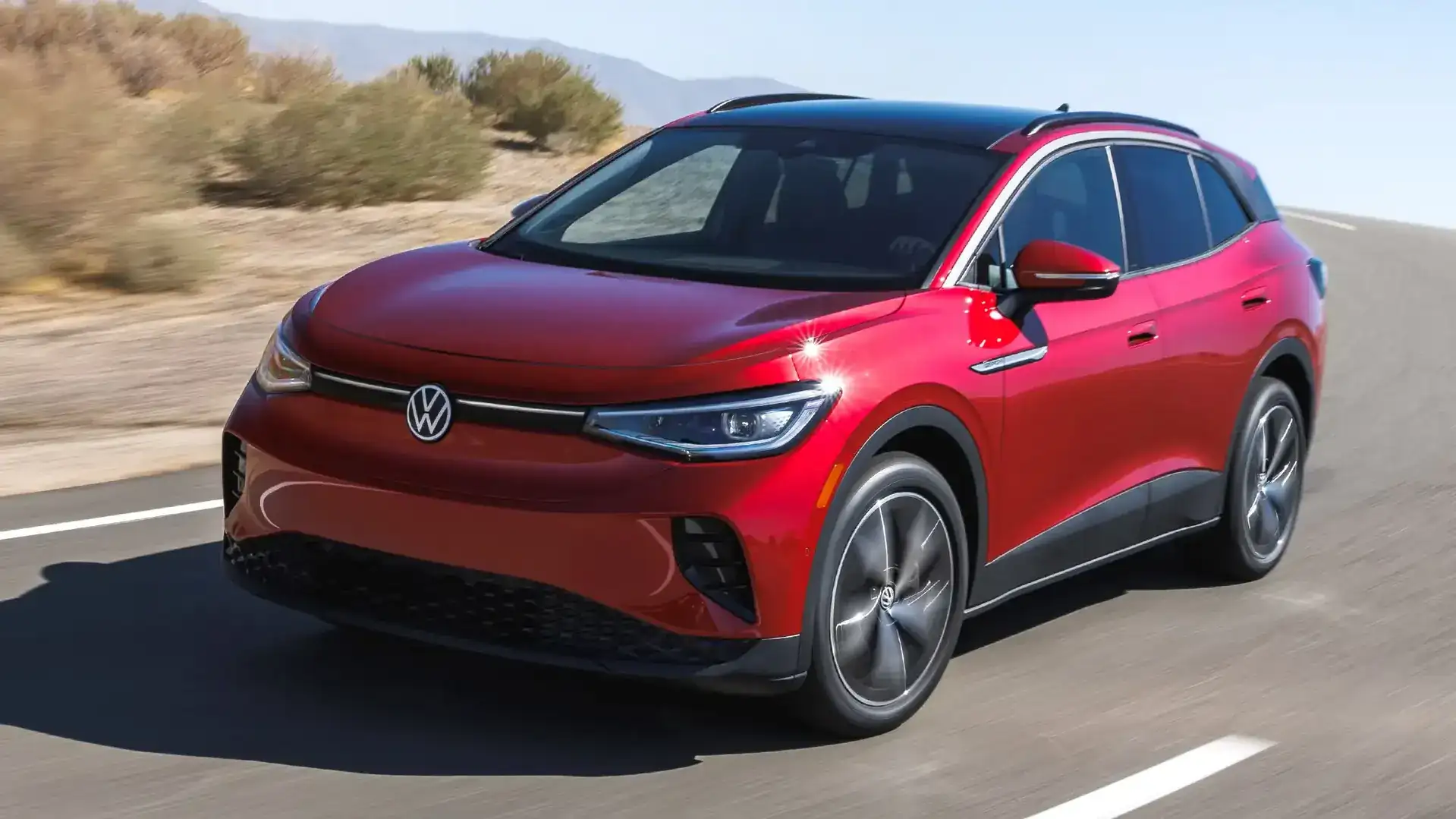
Owning a VW ID.4 in Morgantown means trusting your range every single day, whether you’re heading downtown, across campus, or out toward Fairmont on the interstate. The difference between a well-maintained ID.4 that delivers its full range and one that quietly loses miles over time comes down to whether the right service is being done at the right intervals.
The ID.4 isn’t maintained like a gasoline VW. There’s no oil to change, no spark plugs to replace, and no timing belt ticking down the miles. What replaces those items on the service schedule is a different set of systems, battery thermal management, brake fluid condition, tire wear, software health, and high-voltage component inspection, and each one plays a direct role in how far your ID.4 takes you on a charge.
What Morgantown Commuters Are Actually Asking Of Their ID.4
The Morgantown area is harder on EVs than many drivers realize. Elevation changes along US-119, WV-7, and Stewartstown Road add consistent energy demand that flat-road EPA range estimates don’t fully account for. Winter temperatures regularly drop into the teens and twenties, and cold chemistry in lithium-ion batteries is a known range reducer. Owners commonly report 20 to 40 percent range loss in sub-freezing conditions depending on temperature, driving speed, and cabin heating demand.
That range loss in winter isn’t a sign the battery is failing. It’s a normal thermal response. But when the battery’s thermal management system isn’t properly maintained, when coolant condition is neglected or the software managing temperature thresholds hasn’t been updated, what should be a temporary seasonal dip can become a persistent drag on range that doesn’t recover when the weather warms up.
Understanding what certified service actually covers on the ID.4 helps clarify why skipping visits costs more than it saves.
The ID.4 Battery Thermal System and Why It Needs Attention
The ID.4 uses a liquid-cooled thermal management system to keep the high-voltage battery operating within its target temperature range. This isn’t passive. The system actively circulates coolant through the battery pack, coordinates with the charging electronics, and adjusts based on ambient temperature, driving demand, and state of charge. In cold weather, it works to bring the battery up to operating temperature before allowing full power output. In summer heat, it prevents the pack from crossing into ranges that accelerate degradation.
That coolant loop needs periodic inspection. At roughly the 20,000-mile mark and at each subsequent service interval, a VW-trained technician should inspect the cooling system level and frost protection rating, particularly relevant for Morgantown winters. Neglected coolant that’s lost its protective properties or dropped below proper level compromises how efficiently the thermal system maintains battery temperature, which affects both real-time range and long-term capacity health.
What Certified Battery Service Includes
When you bring your ID.4 to a VW-certified service center for battery service, the scope goes well beyond a visual inspection. Key elements of a thorough ID.4 service visit include:
- High-voltage battery condition check, including state of health assessment using VW’s factory diagnostic tools, which can generate a Battery Health Quicktest or Battery Health Certificate that documents remaining capacity against the original specification
- Fault code scan covering the battery heater, cooling circuit, and DC fast-charging behavior; fault codes that don’t surface as dashboard warnings can still indicate developing issues with charging efficiency or thermal regulation
- Software updates, including OTA updates and dealer-applied firmware patches that address range optimization, charging behavior improvements, and battery management refinements; an ID.4 that hasn’t received available updates may be leaving measurable range on the table
- Tire rotation and pressure check, since the ID.4’s battery weight and instant torque create faster and more uneven tire wear than comparable gas crossovers; proper rotation directly extends tire life and maintains even grip across all four corners
- Brake fluid inspection and replacement; the ID.4’s regenerative braking system reduces how often friction brakes engage, but brake fluid still absorbs moisture from the air over time, and VW’s schedule typically calls for brake fluid replacement around the three-year mark with subsequent changes following thereafter
Why Factory Tools Matter for the ID.4
Third-party OBD scanners and aftermarket apps can pull battery data from the ID.4, but they aren’t the full picture. Only VW’s factory diagnostic tooling can generate the official battery health documentation that Volkswagen relies on for warranty decisions. If your ID.4 is still within its 8-year, 100,000-mile high-voltage battery warranty, which covers excessive capacity loss below approximately 70 percent of original capacity, having that documentation current matters if a warranty concern ever arises.
Independent shops may be able to handle basic tire rotations and cabin filter replacements on the ID.4, but for anything involving battery health assessment, software updates, high-voltage component inspection, or recall remediation, a certified VW service center is the appropriate choice. The factory tools and certified technicians are what make the difference between a report that counts and one that doesn’t.
Software Updates Are Maintenance
This is a point that many ID.4 owners miss. Software updates on the ID.4 aren’t just infotainment improvements. They address battery management algorithms, charging behavior, thermal threshold calibration, and range efficiency. Owners whose vehicles have received major available updates consistently report better range, faster charging response, and fewer operational quirks.
Some updates are delivered over-the-air while the vehicle is parked. Others require a dealer visit. Confirming that your ID.4’s software is current at every service visit is a simple step that costs nothing extra and can meaningfully affect how efficiently your battery performs over time.
Recognizing When Something Is Off
Between scheduled service visits, there are a few patterns worth paying attention to in a Morgantown ID.4:
- Summer range that feels abnormally low compared to earlier ownership, not winter range which fluctuates normally, but warm-weather efficiency that seems to have permanently declined
- Slower DC fast-charging speeds than you used to see, or the car requiring longer to reach 80 percent
- A steering wheel that doesn’t sit perfectly centered on straight roads, which can indicate alignment drift and will show up in accelerated tire wear on an ID.4 before most drivers notice the pull
Any of these patterns is a reason to schedule a battery health check and inspection rather than waiting for the next mileage interval.
Keeping Your Commute Reliable in Every Season
An ID.4 that’s properly serviced is one that earns your trust on the daily Morgantown commute, the run out toward Cheat Lake, the uphill stretch back toward Evansdale, the mornings when you need every mile the car has to offer. Certified service is how you protect that reliability without guessing.
The service team at Volkswagen Morgantown is factory-trained on the ID.4’s EV-specific maintenance requirements and equipped with VW’s diagnostic tooling for accurate battery health assessment. Schedule your ID.4 service appointment at our dealership located at 401 Mary Jane Wood Circle, Morgantown, WV 26501, and let us make sure your battery, thermal system, and tires are all working together the way Volkswagen engineered them to.

0 comment(s) so far on Morgantown Commuter Care: Maximize Your VW ID.4 Range with Certified Battery Service