



Pothole Recovery: Why Morgantown’s Spring Thaw Requires a VW Precision Wheel Alignment.
Last March, a 2021 Volkswagen Tiguan came into our service bay after its owner hit a particularly aggressive pothole on University Avenue near the WVU Coliseum during the evening commute. The impact felt significant but the car seemed to drive normally afterward, so she waited six weeks before bringing it in. By that point the front left tire had worn through the inner edge aggressively enough to require replacement, and the rear subframe alignment had shifted measurably from the impact. The tire replacement, four-wheel alignment, and subframe adjustment totaled $890. The alignment check the week after the impact would have cost $120.
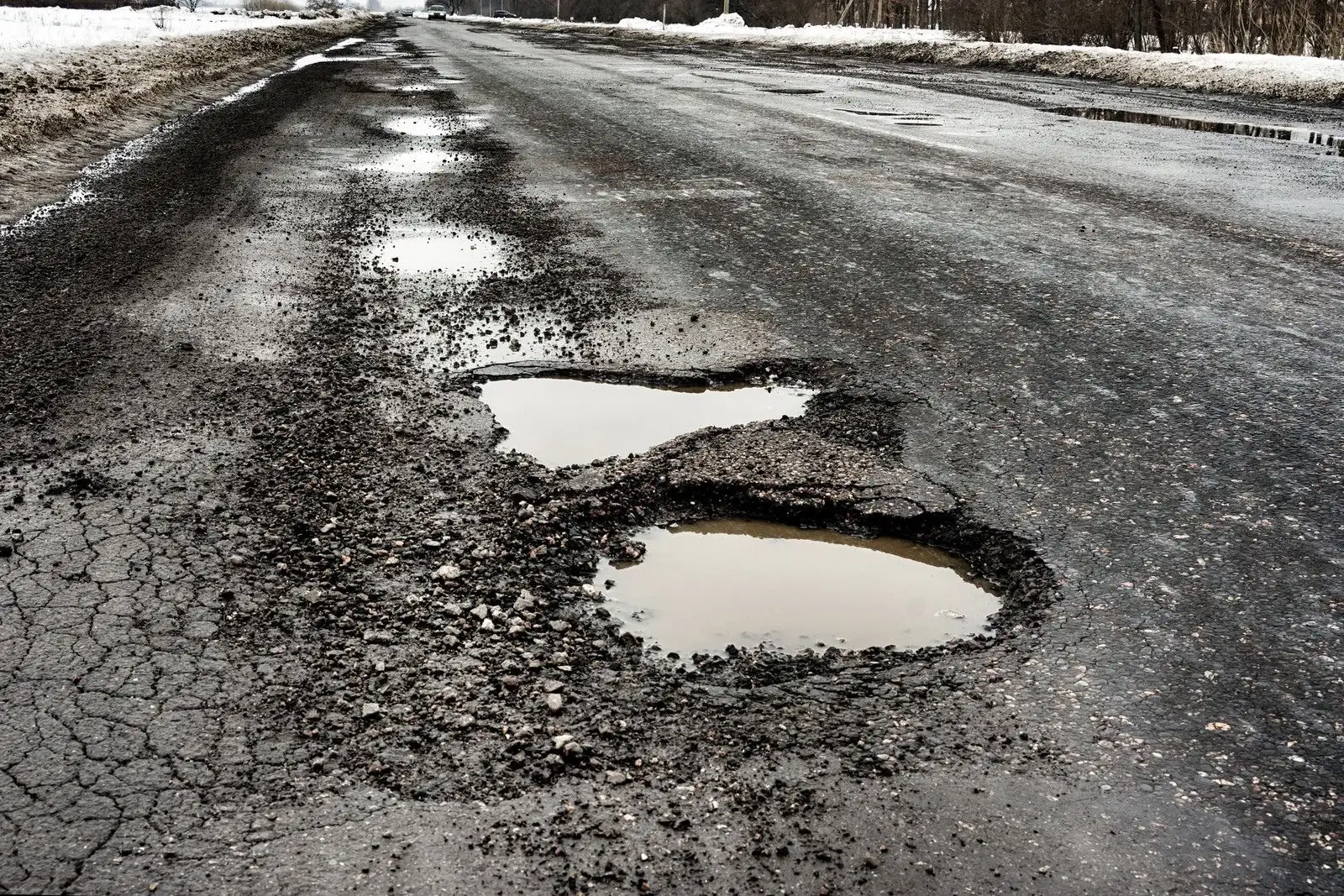
Morgantown drivers know pothole season the way farmers know planting season. It arrives predictably every late February and March when the freeze-thaw cycle does its annual work on Monongalia County roads, and it turns familiar commutes on Greenbag Road, University Avenue, and the Suncrest Towne Centre area into an obstacle course of pavement failures that range from annoying to genuinely damaging. For Volkswagen owners, the consequences are more specific than a rough ride.
VW vehicles are engineered to tighter suspension tolerances than most mainstream vehicles, which is a large part of what gives a Jetta or Passat its composed, precise handling character. That same precision means the alignment specifications are narrower, the sensitivity to impact damage is higher, and the consequences of driving on a misaligned VW longer than necessary show up in tire wear and steering feel faster than they would on a truck or traditional SUV.
This guide covers what happens to a Volkswagen’s alignment geometry when it takes a serious pothole hit, why Morgantown’s specific road conditions make this an annual concern rather than an occasional one, what to look for after a hard impact, and why a VW precision alignment is a meaningfully different service than a standard adjustment.
What Wheel Alignment Actually Controls on a Volkswagen
The Three Angles That Govern Your Tires
Wheel alignment is the adjustment of three geometric angles that determine how each tire sits relative to the road and to the vehicle’s centerline. Camber is the inward or outward tilt of the tire when viewed from the front of the vehicle. Toe is whether the fronts of the tires point slightly inward or outward relative to each other, like a person standing pigeon-toed or splayed. Caster is the angle of the steering axis relative to vertical, which primarily governs steering stability and return-to-center feel.
On a Volkswagen, all three angles are set to specifications that are tighter than industry average. Camber tolerances on a Jetta or Golf, for example, are measured in tenths of a degree, and the difference between a camber setting that is correct and one that is at the outer edge of specification is the difference between a tire that wears evenly across its full contact patch and one that consumes its inner or outer edge significantly faster than the center.
Why VW Suspension Design Amplifies Alignment Sensitivity
Volkswagen’s multi-link rear suspension and MacPherson strut front suspension are designed for a specific balance of ride quality, handling precision, and tire contact. The geometry relationships between these components are interdependent, meaning a change in one angle affects the others in ways that a simple visual inspection cannot detect. When a pothole impact shifts a control arm bushing or bends a tie rod even fractionally, the cascade effect on the full alignment geometry is larger than the raw measurement of the damaged component suggests.
This is the core reason a VW precision alignment is not interchangeable with a standard two-wheel thrust angle alignment at a general shop. Properly aligning a VW requires measuring all four wheels simultaneously, understanding the specific geometry targets for the model and trim, and having equipment calibrated to the tolerances VW engineering requires. A standard alignment machine set to generic passenger car parameters will bring a VW into a range that appears acceptable on the printout while still being outside VW specification in ways that affect tire wear and handling.
What Morgantown’s Roads Do to VW Alignment Every Spring
The Freeze-Thaw Cycle and Pavement Failure
Monongalia County’s spring thaw creates pothole conditions that are more severe than many West Virginia communities because of Morgantown’s specific geography and traffic patterns. The elevation change between downtown Morgantown, the WVU campus area, and the Suncrest and Star City corridors means that meltwater drains unevenly, collecting under pavement sections and then freezing again overnight through February and March. That repeated expansion and contraction under the pavement surface is what creates the deep, sharp-edged potholes that are categorically more damaging to suspension components than shallow surface depressions.
The traffic volume around WVU’s campus and the Morgantown Mall corridor on US-119 means these pavement failures see tens of thousands of vehicle crossings before they are repaired, which deepens and sharpens them further. A pothole that started as a two-inch surface crack in January can be a four-inch deep, hard-edged impact trap by mid-March, and hitting one at 35 miles per hour on University Avenue delivers a shock load to your suspension components that is measurably different from the designed operating load.
The Roads That Cause the Most Alignment Damage
Certain Morgantown roads consistently generate more alignment-related service visits during spring than others, and knowing which ones to navigate carefully is worthwhile for any VW owner in Monongalia County. University Avenue between downtown and the Coliseum area sees among the highest pothole density of any road in the county during spring thaw. Greenbag Road’s expansion joints and patched sections create repeated small impacts that accumulate alignment stress over time rather than delivering one definitive hit. WV-7 heading toward Westover and the stretches of Earl Core Road near the WVU Tech corridor develop edge cracking that catches drivers who hug the right side of the lane.
A 2020 Volkswagen Passat owner from Star City came to us last April after noticing a persistent pull to the right on his daily commute along US-119 toward downtown Morgantown. He had attributed it to road crown for several weeks. When we put the vehicle on the alignment rack, the right front toe was significantly outside specification and the right rear camber had shifted from a winter impact he did not specifically remember as severe. The alignment correction was straightforward at $120, but the right front tire had developed enough inner edge wear during those weeks that it needed replacement at $185. Total: $305. Had he come in within a week of first noticing the pull, the alignment alone would have resolved it.
Warning Signs Your VW Needs an Alignment Check After a Pothole
Impact damage to alignment geometry does not always announce itself dramatically. Many Morgantown VW owners continue driving on a measurably misaligned vehicle for weeks because the change happens gradually relative to what they were used to, and a car that drove slightly better before the pothole still drives acceptably after it. Here is what to pay attention to in the days following any significant impact.
- Steering wheel that is no longer centered when driving straight. Even a few degrees of rotation off-center on a straight road indicates toe or thrust angle has shifted.
- Vehicle pulling consistently to one side without crosswind. A pull that requires constant steering correction to maintain a straight line is one of the clearest alignment indicators.
- Vibration through the steering wheel at highway speeds. Post-impact vibration that was not present before often indicates wheel damage or balance disruption in addition to alignment issues.
- Steering that feels vague or requires more input than usual. Changes in caster from a hard impact affect steering return-to-center and overall directional stability in ways that feel like the car is less planted than it was.
- Uneven tire wear visible on a quick walkaround. Run your hand across the tread surface of each tire. Feathering, inner edge wear, or outer edge wear that is noticeably different from the opposite tire indicates a camber or toe problem.
- Clunking or popping from the front suspension on turns or bumps. A hard pothole impact can damage control arm bushings or ball joints in ways that produce noise before they produce measurable alignment deviation.
- Rear of the vehicle feeling loose or unsettled on highway speeds. Rear alignment issues on VW multi-link suspension are less intuitively obvious than front issues but equally important to tire wear and high-speed stability.
Any of these symptoms following a significant pothole strike on Greenbag Road or University Avenue warrants an alignment check within a week, not at the next scheduled service.
A Cost Comparison That Makes the Case Clearly
What waiting on alignment correction costs:
- Premature front tire replacement from misalignment wear: $180 – $280 per tire
- Alignment correction after extended misaligned driving: $120 – $160
- Control arm bushing replacement if impact damage went unaddressed: $280 – $450
- Total if deferred: $580 – $890
What a prompt post-impact alignment check costs:
- Four-wheel VW precision alignment check and adjustment: $120 – $160
- Minor component inspection included with alignment: $0
- Smart total: $120 – $160
Your potential savings from acting promptly: $460 – $730.
“In Morgantown, we see a very predictable wave of alignment work every spring, and the customers who come in right after a bad hit spend dramatically less than the ones who wait,” says Michael Kostandin, VW Alignment and Suspension Specialist at the Mary Jane Wood Circle location. “A VW is not a vehicle that tolerates misalignment quietly. It will tell you something is wrong through the steering, and it will tell your tires even faster. Coming in within a week of a significant pothole impact is almost always the less expensive decision.”
Why a VW Precision Alignment Differs From a Standard Adjustment
General alignment services at tire shops and quick-service facilities are designed around average passenger car specifications and use equipment calibrated for broad tolerances. For a Chevrolet pickup or a Honda CR-V, that approach is often adequate. For a Volkswagen, it consistently falls short for two specific reasons.
First, VW alignment targets are model and trim-specific, not generic. A Golf R has different suspension geometry targets than a Golf SE, and a Tiguan AWD has different rear alignment specifications than a Tiguan FWD. Applying generic passenger car alignment targets to a VW often produces a result that is technically within the generic acceptable range while being outside the VW-specific range that preserves tire life and handling character.
Second, VW multi-link rear suspension has adjustable rear camber and toe that many alignment facilities do not have the experience or tooling to set correctly. Leaving the rear alignment unadjusted and correcting only the front is one of the most common causes of persistent tire wear on Morgantown VWs that have had alignment work done elsewhere. A proper VW four-wheel precision alignment addresses all adjustable angles on both axles, produces a before-and-after printout with VW-specific specification ranges, and verifies that the steering wheel is centered to within tolerance after adjustment.
Your 30-Day Spring Alignment Check
This week: Drive a familiar straight road and pay attention to your steering wheel. Find a flat, straight section of road with no significant crown, ideally early morning on a lightly traveled street, and note whether your steering wheel is centered and whether the vehicle tracks straight with light hands. Do this at normal driving speed for about a quarter mile. A centered wheel and no drift is a reasonable baseline. Any drift or off-center wheel position is worth logging as a symptom to discuss at your next service visit.
Within two weeks: Check your tire wear pattern across all four corners. With the vehicle parked on level ground, run your palm firmly across the tread surface of each tire from the inner edge to the outer edge. The wear should feel even across the contact surface. Any step, feathering, or significantly worn edge is a measurable indicator of an alignment issue that may have developed over the winter. Pay particular attention to the inner edges of the front tires, where camber-related wear appears first on VW multi-link setups.
By month’s end: Schedule a VW precision alignment check at Volkswagen Morgantown. Even without a specific pothole incident, the cumulative stress of a Morgantown winter on WV-7, University Avenue, and the Suncrest corridor warrants an annual spring alignment verification for any VW in Monongalia County. Our VW-certified technicians use manufacturer-specific equipment and specification targets to verify all four wheels are set correctly, and the before-and-after printout gives you documentation of your vehicle’s alignment health heading into the higher-mileage driving months of spring and summer.
These three steps take less than ninety minutes of your time and protect the most expensive consumable on your Volkswagen from the most preventable form of premature wear.
What Comes After a Morgantown Winter
The Tiguan owner from the opening came back to us the following October for a pre-winter alignment check and has maintained that twice-yearly schedule since. Her tires have worn evenly across two subsequent sets, and her steering has the precise, settled character that a properly aligned Volkswagen is known for. The $120 she spends twice a year has not come close to the $890 that one deferred inspection cost her in the spring of 2023.
Morgantown’s roads are not getting smoother, and the spring thaw cycle is not going anywhere. For Volkswagen owners in Monongalia County, a precision alignment check after winter is simply part of responsible ownership in this environment, the same way residents of coastal areas treat rust protection or desert drivers treat cooling system maintenance.
When you are ready to get your VW’s alignment verified after the spring thaw, the service team at Volkswagen Morgantown, located at 401 Mary Jane Wood Circle, Morgantown, WV 26501, is equipped with VW-specific alignment tooling and specification data to get every angle right the first time. Scheduling is available online or through the service department. A properly aligned Volkswagen handles Morgantown’s roads the way it was engineered to, and that precision is worth protecting. 🎯

0 comment(s) so far on Pothole Recovery: Why Morgantown’s Spring Thaw Requires a VW Precision Wheel Alignment.