




The Morgantown Pothole Survival Kit: Protecting your VW’s suspension and low-profile tires from city street damage.
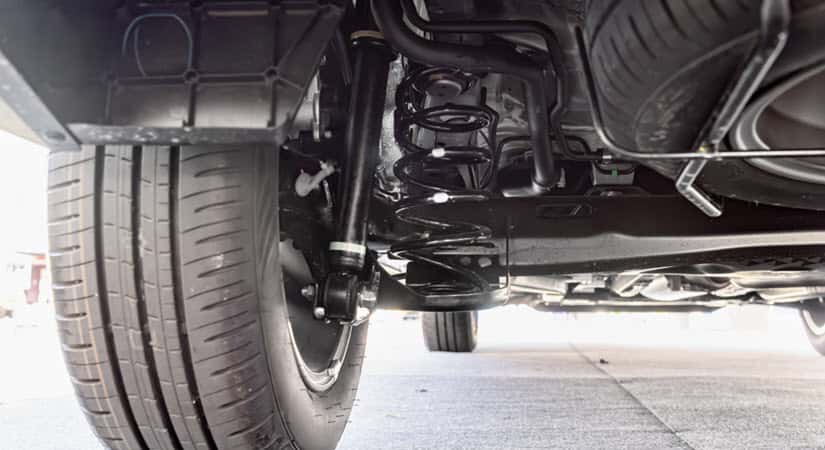
Morgantown’s streets have a reputation that precedes them, and if you’ve navigated the stretch of Beechurst Avenue after a hard winter or tried to keep a straight line down Don Knotts Boulevard near downtown, you already know what your VW’s suspension is quietly absorbing every single day.
Anyone who drives in Morgantown long enough stops being surprised by potholes and starts being surprised when they’re not there. The freeze-thaw cycle that runs through Monongalia County from November through March is one of the most destructive forces a road surface can face. Water seeps into asphalt cracks, freezes, expands, and when it thaws, leaves behind a void that traffic loads collapse into. Repeat that cycle a few dozen times across a single winter and you get the kind of road surface that makes suspension engineers wince.
For Volkswagen owners specifically, the combination of sport-tuned suspension geometry and low-profile tires that come standard on many VW models creates a particular vulnerability. Less sidewall means less cushion between the rim and the road, and the firmer suspension tuning that makes a Golf GTI or Jetta GLI feel planted on the highway translates those pothole impacts more directly into the steering and wheel components than a softer setup would.
What Actually Happens When You Hit a Pothole
The impact from a significant pothole travels a predictable path through the vehicle. The tire takes the first hit. If the sidewall is low enough and the pothole deep enough, the tire can compress fully against the rim in a fraction of a second, which is what causes the rim damage and tire bulging that Morgantown drivers see regularly. From there, the impact moves into the wheel bearing, the tie rod end, and the control arm, all components that were engineered to handle normal road load, not repeated sharp impacts from below.
Alignment is often the first casualty. A single significant pothole strike can push a wheel out of its specified camber or toe angle, and the effects show up gradually: uneven tire wear, a steering wheel that sits slightly off-center, and a pull to one side that wasn’t there before. Drivers frequently attribute these symptoms to tire pressure or normal wear before realizing the underlying geometry has shifted.
Wheel bearings absorb a different kind of damage. They’re designed for rotational load, not lateral shock. A hard pothole strike introduces a lateral spike that can introduce microscopic damage to the bearing races that doesn’t produce symptoms immediately but shortens service life significantly. The rumbling or humming sound that develops months later on the Monongalia Boulevard connector or heading out Route 7 toward Kingwood is often the delayed result of an impact the driver barely remembered.
The Low-Profile Tire Problem in a High-Pothole City
Standard VW models like the Tiguan, Jetta, and Golf come equipped with tires in the 45 to 55 series range. Performance trims push that lower, with 40 and even 35 series profiles on models like the GTI and Golf R. The series number refers to the ratio of sidewall height to tire width. A 40 series tire has a sidewall that’s only 40 percent as tall as the tire is wide.
That reduced sidewall is what gives these cars their responsive, connected feel. It’s also what makes them less forgiving on damaged roads. A 65 series tire on a crossover has significantly more rubber to flex and absorb an impact before it reaches the rim. A 40 series tire on a GTI has almost none. When that tire drops into a deep pothole on University Avenue near the WVU campus, the rim takes the hit with very little buffer.
Rim damage in Morgantown ranges from cosmetic curb scrapes to structural bends that cause slow air loss and vibration at highway speed. A bent rim may not be immediately obvious. The car drives, the tire holds air, but the slight imbalance it introduces shows up as a vibration that worsens with speed and eventually stresses the wheel bearing it’s mounted on.
Marcus Caldwell, a senior technician at Volkswagen Morgantown, sees the seasonal pattern every year. “Every spring we get a wave of cars coming in with alignment issues, bent rims, and worn tie rod ends that all trace back to winter road conditions. The GTI and GLI owners get hit hardest because those low-profile tires give the wheel almost no protection. What feels like a minor bump at 30 miles an hour can do real damage.”
Warning Signs Your Suspension Has Taken a Hit
Catching suspension damage early keeps repair costs manageable. Left unaddressed, a bent rim stresses the wheel bearing, a worn tie rod end affects steering precision, and a shifted alignment accelerates tire wear to the point where a set of tires that should last 40,000 miles wears out in half that. Here’s what to watch for after a significant impact or a rough stretch of road:
- Pulling to one side: A consistent pull during straight-line driving that wasn’t present before a hard impact usually indicates alignment shift. Even a small change in toe or camber angle will cause the vehicle to track off-center.
- Steering wheel vibration: Vibration that increases with speed often points to a bent rim or a tire that developed a bulge or flat spot from a hard pothole strike.
- Humming or rumbling from one corner: A wheel bearing producing noise will often change in pitch when the vehicle is steered slightly left or right, which shifts load between the bearings and makes the damaged one easier to identify.
- Uneven tire wear: Feathering, inner or outer edge wear, or cupping patterns across the tread face all indicate alignment or suspension geometry problems that are accelerating wear unevenly.
- Clunking over bumps: A clunk or knock that appears specifically over rough surfaces often indicates a worn control arm bushing or a ball joint that has lost its normal range of motion.
What a Post-Winter Suspension Inspection Covers
A thorough suspension inspection at Volkswagen Morgantown covers the components most vulnerable to pothole and winter road damage. Technicians check alignment angles against VW’s factory specifications using alignment rack equipment, inspect tie rod ends and ball joints for play, evaluate wheel bearing condition by checking for roughness and lateral movement, and assess rim condition for bends or cracks that affect balance and air retention.
Tire condition is evaluated alongside suspension components because the two are directly connected. A tire with internal damage from a hard impact may hold air normally but have compromised structural integrity that increases blowout risk at highway speed on I-79 north toward Fairmont or heading south on US-19. Sidewall bulges are a particular concern and are considered a safety replacement rather than a wear replacement.
Cost ranges for common pothole-related repairs give a useful picture of what deferred maintenance can become. Wheel alignment runs $80 to $130 at the dealership. A single bent rim replacement depending on the wheel style runs $200 to $500. Tie rod end replacement typically falls between $150 and $300 per side including labor. Wheel bearing replacement runs $250 to $450 per corner. Catching these items early, before secondary damage compounds the repair, keeps the total manageable.
The 30-Day Morgantown Pothole Survival Plan
The most effective thing a Morgantown VW owner can do is schedule a suspension inspection at the end of winter before spring driving fully reveals what the roads have done. March and April are the months when potholes are deepest and most numerous, and they’re also the months when the cumulative damage from a full winter season is most worth assessing in one visit.
Between now and that appointment, pay attention to how the car tracks on a straight, level stretch of road. Let go of the wheel briefly on a quiet section of Grafton Road or the Veterans Memorial Bridge approach and note whether the car holds a straight line. Check tire pressure weekly. A slow leak from a rim that took a pothole hit often shows up as one tire consistently running lower than the others. After any impact that felt harder than usual, note whether the steering feel or ride quality changed in the days that followed.
Jamie Sellers, a service advisor at Volkswagen Morgantown, works with customers on this regularly. “We always tell people not to wait until something feels obviously wrong. By the time a bearing is loud or a tie rod end has real play in it, there’s usually secondary wear that’s already happened. A post-winter inspection is a lot cheaper than waiting for a symptom.”
For VW owners who want to stay ahead of Morgantown’s road conditions, the service team at Volkswagen Morgantown is ready to put the car on the alignment rack and go through the full suspension check. Book your appointment online or stop in at 401 Mary Jane Wood Circle, Morgantown, WV 26501 and let the technicians give your suspension a proper assessment before the next pothole season begins.

0 comment(s) so far on The Morgantown Pothole Survival Kit: Protecting your VW’s suspension and low-profile tires from city street damage.