




VW Cabin Air Filter Replacement: Defending Against Ohio Valley Pollen & Winter Dampness
Key Takeaways
- The Ohio Valley’s heavy pollen season places real demand on a cabin air filter, often more than drivers in other regions experience.
- Winter dampness and road salt introduce their own airborne particles that a cabin filter has to manage during the colder months.
- A clogged cabin filter affects more than just air quality, also reducing climate system efficiency and increasing strain on the blower motor.
- Seasonal replacement, timed around pollen and winter transitions, keeps the cabin filter working the way it should year round.
Morgantown and the surrounding Ohio Valley region see two very different seasonal challenges for a Volkswagen’s cabin air filter, from a heavy spring pollen season to damp, salty winter conditions. A routine cabin filter replacement costs far less than the reduced comfort and increased strain on the climate system that comes from ignoring a clogged filter. Understanding how these two seasonal extremes affect the filter helps owners keep the cabin comfortable and the air inside genuinely clean throughout the year.
Why the Ohio Valley’s Pollen Season Is Particularly Demanding
The Ohio Valley region, including the hills and river valleys surrounding Morgantown, experiences a pollen season that tends to be more intense and longer lasting than many other parts of the country. The valley’s geography, combined with the mix of deciduous trees, grasses, and other vegetation throughout the area, creates conditions where pollen counts can climb significantly during peak season, typically running from early spring through early summer with some overlap into fall for certain plant species.
A cabin air filter is the primary barrier between all of that airborne pollen and the interior of a Volkswagen, and during peak season, a filter can accumulate a noticeable amount of buildup in a relatively short period of time. Drivers who keep their windows down during pleasant spring weather may not realize that pollen is still making its way into the cabin through the ventilation system every time the climate control fan runs, regardless of whether the windows themselves are open or closed.
For drivers who deal with seasonal allergies, a clogged or aging cabin filter can meaningfully worsen symptoms during a drive, since the filter’s ability to trap fine pollen particles diminishes as it becomes more saturated with debris.
Winter Dampness and Its Effect on the Cabin Filter
Once pollen season passes, Morgantown’s winter months introduce a different challenge for the cabin filter. Damp, wet weather combined with road salt and grime kicked up from wet pavement introduces moisture and fine particulate matter into the ventilation system in ways that summer driving typically doesn’t. A cabin filter exposed to consistent moisture over the winter months can develop a musty odor if it isn’t replaced on a reasonable schedule, since trapped moisture combined with organic debris creates conditions where mold or mildew can develop within the filter material itself.
This musty smell is often one of the first noticeable signs that a cabin filter needs attention, particularly when the odor becomes most apparent right after the climate system turns on, whether running heat on a cold morning or defrosting a foggy windshield during a damp Morgantown winter commute.
How a Clogged Filter Affects More Than Air Quality
A cabin air filter loaded with pollen, dust, or winter grime doesn’t just reduce the quality of air inside the vehicle. It also restricts airflow through the ventilation system, which forces the blower motor to work harder to push the same amount of air through the cabin. Over time, this added strain can shorten the lifespan of the blower motor and reduce the overall efficiency of the climate control system, meaning it takes longer to heat or cool the cabin than it should.
A few signs point to a filter that’s affecting more than just air quality:
- Noticeably weaker airflow from the vents, even when the fan is set to its highest speed
- A musty or stale odor when the climate system first turns on, particularly common after a damp winter stretch
- Increased fan noise, since a straining blower motor working against restricted airflow often runs louder than normal
- Visible dust or debris buildup on interior surfaces, which can indicate air isn’t being filtered as effectively as it should be
Recommended Replacement Timing for This Region
Because Morgantown and the surrounding Ohio Valley experience two distinct seasonal challenges, cabin filter replacement timed around each transition makes practical sense. Replacing the filter in early spring, before pollen season reaches its peak, gives the filter a fresh start heading into the months when it will see the heaviest demand. A second replacement heading into winter, after the fall allergy season has passed but before the wettest, saltiest months arrive, helps the filter handle winter conditions without carrying over months of accumulated spring and summer debris.
This two season approach differs somewhat from the standard mileage based replacement interval many owners default to, since it accounts specifically for the Ohio Valley’s more pronounced seasonal swings rather than assuming a filter wears evenly throughout the year regardless of season.
Signs Your Cabin Filter Needs Attention
A few things are worth checking if they appear at any point during the year:
- A musty smell that appears specifically when the climate system turns on
- Reduced airflow from the vents despite the fan running at a normal or high setting
- Increased allergy symptoms noticed specifically while driving compared to other environments
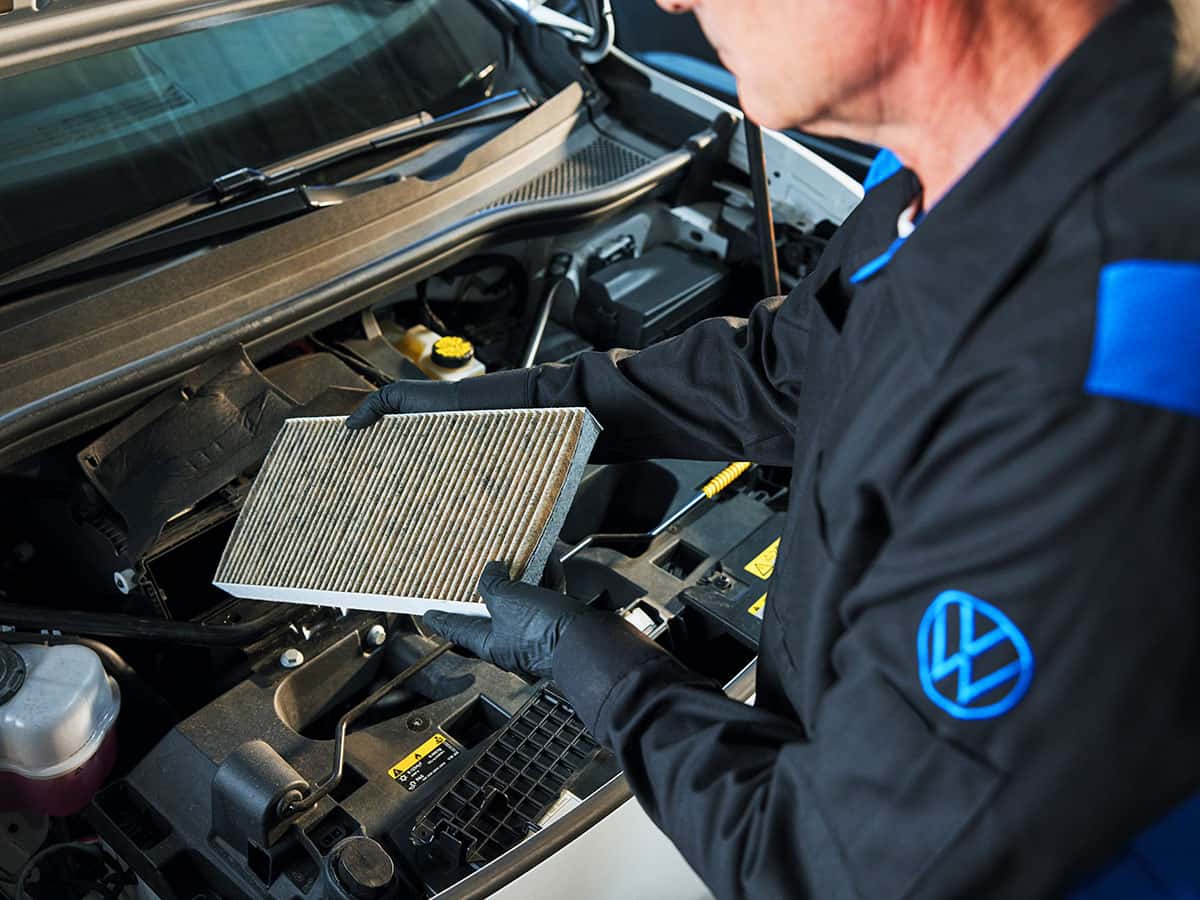
- Visible debris or discoloration on the filter itself during a quick inspection
Building Filter Replacement Into a Seasonal Routine
Our technician Dale Fetty recommends that Morgantown area Volkswagen owners think of cabin filter replacement as a two season habit rather than a once a year task, given how differently pollen and winter dampness each affect the filter. He often finds that customers who wait for a full year between replacements are dealing with a filter that struggled through the tail end of pollen season and the wettest part of winter simultaneously, which is a harder ask for a single filter than most owners realize.
Our service advisor Callie Wamsley notes that cabin filter replacement is a relatively quick and inexpensive service that can easily be added onto another scheduled visit, making it simple to build into a spring and fall routine without needing a separate appointment dedicated solely to the filter.
The Ohio Valley’s pollen and winter conditions each place their own specific demands on a Volkswagen’s cabin air filter, and staying ahead of both seasons keeps the cabin comfortable and the air quality where it should be throughout the year. Our team at Volkswagen Morgantown, located at 401 Mary Jane Wood Circle, Morgantown, WV 26501 is happy to check your cabin filter at your next visit and help you plan replacement timing around Morgantown’s distinct seasonal challenges.

0 comment(s) so far on VW Cabin Air Filter Replacement: Defending Against Ohio Valley Pollen & Winter Dampness