




VW Coolant Flushes: Why Using the Wrong “Pink Fluid” Can Damage Your Cooling System.
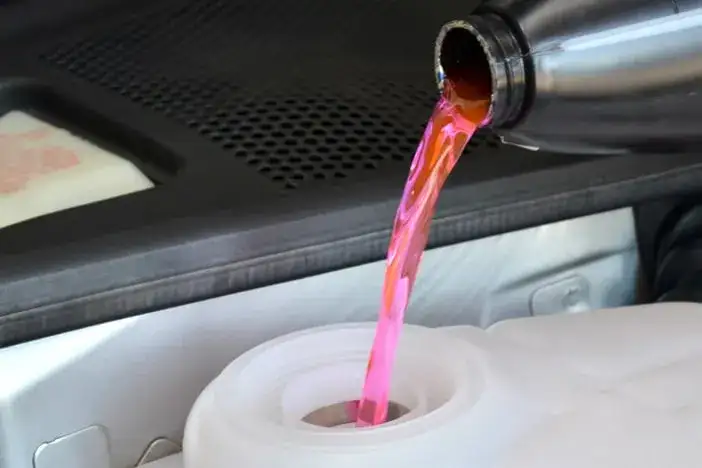
A Volkswagen Passat owner came into our service bay last month after his temperature gauge had been running higher than normal on his daily commute on I-79 between Morgantown and Fairmont. He had topped off his coolant reservoir six months earlier with a universal pink coolant from an auto parts store on University Avenue, assuming the matching color meant it was compatible with whatever was already in the system. When we flushed the cooling system, we found the beginning of pitting corrosion on the aluminum water pump housing and a compromised radiator seal from an additive incompatibility reaction between the universal coolant and the G13 specification fluid that had been in the system. The cooling system repair cost $890. A correct coolant top-off at our facility would have cost $35.
Pink coolant is one of the most dangerous assumptions in automotive maintenance, and Volkswagen owners are among the most frequently affected by it. The logic seems sound: the coolant in your VW reservoir is pink, the bottle at the auto parts store on Monongalia Avenue is pink, therefore the bottle will work in the car. That logic has produced a consistent and expensive pattern of cooling system damage in Volkswagen vehicles that our service team addresses every season, and the reason it fails is that the color of coolant communicates nothing meaningful about its chemical composition or its compatibility with the metals and seals in your specific cooling system.
Volkswagen uses a proprietary coolant specification called G13, and in older vehicles G12 or G12+, that is formulated specifically for the aluminum-intensive cooling systems in VW engines. The chemistry behind G13 is fundamentally different from the universal pink coolants sold at general auto parts stores, and mixing them does not produce a blended fluid with averaged properties. It produces a chemical reaction between incompatible additive packages that generates deposits, attacks the aluminum components the VW-specification fluid was designed to protect, and compromises the organic acid technology that gives G13 its corrosion inhibition capability. For Morgantown-area drivers who use their vehicles on the I-79 grades between Morgantown and Fairmont, where cooling system demand is higher than flat-road driving produces, a compromised cooling system is not a slow-developing problem. It is an accelerating one.
At Volkswagen Morgantown, coolant-related cooling system damage from incorrect fluid is one of the more consistent and preventable repair categories we see throughout the year. The information that prevents it is straightforward, and every VW owner in Monongalia County deserves to have it before the next time the low coolant light appears on US-119 or the reservoir looks low before a mountain drive on US-33.
What Makes VW’s G13 Specification Different
The G13 coolant specification that Volkswagen requires is an ethylene glycol-based fluid that uses an organic acid technology inhibitor package, sometimes referred to as OAT chemistry, specifically formulated for the aluminum alloys used in modern VW engine blocks, cylinder heads, water pump housings, and radiator end tanks. The organic acids in G13 form a protective molecular layer on aluminum surfaces that prevents the electrochemical corrosion that occurs when dissimilar metals in the cooling circuit interact in the presence of water and heat.
Universal pink coolants sold at general auto parts stores on University Avenue and the Morgantown area commercial corridors use different inhibitor chemistry, often a hybrid organic acid technology or an inorganic additive technology formulation that is designed to be compatible with a broad range of vehicles rather than optimized for any specific one. That broad compatibility comes at a cost: the inhibitor chemistry in a universal fluid is not designed to form the same protective layer on the specific aluminum alloys VW uses, and when mixed with G13, the two inhibitor packages can interact in ways that neutralize each other’s protective function and leave the aluminum surfaces in the cooling system temporarily unprotected during the period when the mixed fluid is circulating.
The visual evidence of this reaction is not immediate. A cooling system filled with a mixed fluid does not immediately overheat or produce a warning light. The corrosion process that the additive incompatibility initiates is gradual, which is why owners who topped off with a universal fluid often drive for months before any symptom appears, by which point the corrosion has been developing unchecked since the incorrect fluid was added.
Why West Virginia Mountain Driving Accelerates the Problem 🌡️
The cooling system damage that incorrect coolant chemistry initiates develops faster in the driving environment that Morgantown-area VW owners experience than it would in a milder commuting environment, and the reason is straightforward: heat accelerates every chemical reaction, including the corrosion reactions that incompatible coolant chemistry initiates.
The I-79 grade between Morgantown and the Chestnut Ridge area, the sustained climbing on US-119 south toward Grafton, and the descents on US-33 east toward Elkins all require the cooling system to manage higher thermal loads than flat-road driving produces. A cooling system working at elevated temperature with a compromised inhibitor package from mixed fluid chemistry is accelerating the corrosion process at exactly the moment it is most mechanically stressed. The aluminum water pump housing that is corroding from additive incompatibility is simultaneously under the maximum pressure and flow demand the system produces during a sustained I-79 grade climb. That combination produces damage faster than the same chemical process would in a vehicle that only drives flat urban roads.
Winter cold adds another dimension. West Virginia’s freeze-thaw cycle means the coolant in a Morgantown VW is working against freezing temperatures from November through March and elevated thermal loads on summer mountain drives. A mixed fluid whose freeze point has been altered by the dilution of an incompatible additive package may not provide the freeze protection that pure G13 at the correct concentration would offer, which produces a different kind of cooling system failure on a cold January morning on Mary Jane Wood Circle than the corrosion damage that summer mountain driving accelerates.
What Correct Coolant Service Costs vs. What Wrong Fluid Costs 💰
The cost comparison between correct coolant service and incorrect fluid damage is among the most dramatic in routine VW maintenance:
- Coolant level check and correct G13 top-off: $25 to $45
- Full G13 coolant flush and refill: $120 to $180
- Coolant system inspection and pressure test: $65 to $95
Correct coolant service over five years: $200 to $350 total
Incorrect fluid damage repair costs:
- Water pump replacement from corrosion damage: $380 to $620
- Radiator replacement from seal failure: $480 to $780
- Thermostat housing replacement from deposit buildup: $220 to $380
- Cylinder head gasket replacement from sustained overheating: $1,200 to $2,400
- Full cooling system restoration after severe corrosion: $1,800 to $3,600
The $35 correct coolant top-off against the $890 cooling system repair in the opening story is not an unusual ratio. The repair cost from incorrect fluid damage routinely runs 15 to 25 times the cost of the correct service that prevents it, and none of those repair costs are covered under Volkswagen’s warranty once incorrect fluid use is identified in the system.
A Star City Driver Who Learned the Difference
A Volkswagen Jetta owner from Star City came in last spring after noticing a sweet smell from the engine bay after his commute on US-19 into Morgantown. He had added universal pink coolant to his reservoir three times over the previous year, each time noting that the color matched. When our technician inspected the system, the coolant sample showed the characteristic milky discoloration from additive incompatibility reaction and the reservoir cap seal had begun to deteriorate from contact with the incompatible fluid. A complete flush with fresh G13 and a new reservoir cap corrected the situation for $165 before any structural components were affected. He had been one overheating event on the US-19 grade away from the kind of cylinder head gasket failure that incompatibility-driven corrosion eventually produces in a system that is not corrected. The flush at $165 was the intervention that prevented that outcome.
Warning Signs Your Cooling System Has Been Compromised ⚠️
The consequences of incorrect coolant in a VW cooling system develop in a recognizable pattern. These are the indicators that suggest the system needs inspection and possible correction:
Temperature gauge that runs higher than normal on familiar grades: A cooling system that has been compromised by additive incompatibility loses some of its heat transfer efficiency as deposits accumulate on heat exchanger surfaces. On the I-79 grade north of Morgantown or the US-119 climb toward Grafton, that reduced efficiency shows up as a temperature reading that is noticeably higher than the same route produced previously.
Sweet smell from the engine bay after a drive: Ethylene glycol has a distinctive sweet odor that becomes noticeable when it is present outside the cooling circuit, whether from a weeping radiator seal, a water pump gasket that has been compromised by corrosion, or a reservoir cap that is no longer sealing correctly.
Coolant that has changed color or appears discolored: Fresh G13 is a specific shade of purple-pink that is visually distinct from other coolant formulations. Coolant that has turned brown, orange, or has developed a murky or milky appearance has either been contaminated, mixed with an incompatible fluid, or has exhausted its additive package and needs replacement.
Reservoir that requires topping off more frequently than expected: A cooling system that is sealed and functioning correctly should not require regular coolant additions. A reservoir that needs topping off every few months without a visible external leak has an internal leak that is most commonly a compromised water pump seal, radiator seal, or head gasket, all of which can be initiated by corrosion from incompatible coolant chemistry.
Heater output that has become less effective than it used to be: The heater core is a small heat exchanger in the dashboard that uses coolant flow to warm cabin air. Deposit accumulation from mixed fluid chemistry restricts coolant flow through the heater core in a way that reduces heater output before it produces any engine temperature symptom. If your VW’s heater feels less effective on the WVU campus approach on a cold January morning than it did last winter, the cooling system deserves inspection.
White residue around coolant hose connections or the reservoir cap: Dried coolant residue around connection points indicates a slow leak or weeping seal. When that residue is white or powdery rather than the characteristic color of the coolant, it suggests the fluid that dried there had been chemically altered from its original formulation, which points to additive incompatibility rather than a simple leak of correct fluid.
Coolant warning light combined with a temperature gauge that is normal: Some Volkswagen models can produce a low coolant warning while the temperature gauge reads normal if the sensor that triggers the warning is located at a different point in the system than the temperature sensor. A warning light in this configuration that appears on a Morgantown commute warrants a same-week inspection rather than a watch-and-see approach.
What Our Service Team Says
“The pink coolant assumption is the one we spend the most time correcting in conversation, and it costs the most when it goes uncorrected. The color of coolant is a marketing decision, not a chemistry indicator. G13 is pink because Volkswagen specified it that way for identification purposes. Universal pink coolants are pink because the manufacturer chose that color. The chemistry inside those two bottles has nothing to do with the color on the outside, and mixing them is not like mixing two similar paints. It is like mixing two different chemical systems that were not designed to interact. We see the results of that interaction regularly enough that I tell every VW owner the same thing: if your coolant is low, call us before you add anything. A five-minute conversation prevents a four-figure repair.” — Chris Alvarez, Lead Service Technician, Volkswagen Morgantown
When Correct Fluid Made All the Difference
Margaret drives her Volkswagen Tiguan between her home in Westover and her office near the WVU Health Sciences campus on Medical Center Drive, a commute that takes her through some of Morgantown’s most elevation-variable surface streets. She came in after noticing her temperature gauge had been running slightly above its normal position on the climb up Medical Center Drive on warm afternoons. She mentioned she had added coolant from a bottle she had at home without checking the specification. Our coolant sample test confirmed mixed fluid chemistry and we performed a complete flush and refill with fresh G13 for $155. The temperature behavior on the Medical Center Drive grade normalized immediately after the flush. The water pump and radiator that had been developing early corrosion from the additive incompatibility were both within serviceable condition at that point, which meant no component replacement was needed alongside the fluid correction.
Your 30-Day Coolant System Check
This week, locate your Volkswagen’s coolant reservoir under the hood and note the current fluid level and color. Fresh G13 in good condition is a clear, distinctly purple-pink color. Fluid that looks brown, orange, murky, or significantly different in color from the purple-pink of fresh G13 warrants a fluid sample test at Volkswagen Morgantown before the next mountain drive on I-79 or US-33. Do not add any fluid to the reservoir if the level is low without first confirming the correct specification with our service team, because the addition of an incompatible fluid to a partially depleted system initiates the reaction that correct fluid alone would not.
Within two weeks, check your service records for the last coolant flush date and the fluid specification noted on the service record. If the last flush used a fluid other than G13 or G12+ for older models, or if the specification is not documented, a flush with correct fluid at your next service visit is the appropriate correction regardless of how the current fluid appears visually. Additive incompatibility does not always produce visible discoloration before the damage it initiates is underway.
By month’s end, if any of the warning signs described above are present or if your coolant service history is unclear, schedule a cooling system inspection at Volkswagen Morgantown. Our technicians can sample the current fluid, test its additive concentration and freeze point, inspect the system for early corrosion indicators at the water pump housing and radiator connections, and perform a pressure test that identifies weeping seals before they become active leaks on the I-79 grade. These steps take less than 90 minutes and address the cooling system risk that incorrect fluid creates before it produces the repair bill that the Passat owner in our opening story experienced.
Schedule Your Coolant Service at Volkswagen Morgantown
The Passat owner whose universal pink coolant top-off cost him $890 in cooling system repairs came back after that visit for a complete G13 flush and has maintained correct coolant specification at every service since. His cooling system has shown no further corrosion indicators at subsequent inspections, and his temperature behavior on the I-79 grade between Morgantown and Fairmont has been normal through two subsequent driving seasons. The $35 correct top-off that would have prevented the initial damage costs the same today as it did when he chose the universal fluid instead. The difference between those two choices is visible in a repair invoice that he keeps as a reminder.
Our team at Volkswagen Morgantown stocks VW-specification G13 coolant and performs cooling system services using only the correct fluid for your specific model year and engine. We do not substitute universal fluids for cost savings, and we document the fluid specification on every service record so that your coolant history is clear at every subsequent visit.
Visit us at Volkswagen Morgantown, 401 Mary Jane Wood Circle, Morgantown, WV 26501. Our service department is open Monday through Saturday. Schedule your coolant service online through our website or speak with one of our service advisors directly. We serve drivers from Morgantown, Star City, Westover, Granville, Fairmont, and throughout Monongalia County. The right coolant costs almost nothing. The wrong one costs far more than it should. 🌡️

0 comment(s) so far on VW Coolant Flushes: Why Using the Wrong “Pink Fluid” Can Damage Your Cooling System.