




VW DSG (Direct Shift Gearbox) Transmission Service
Key Takeaways
- DSG transmissions rely on precise fluid changes: Unlike traditional automatics, Volkswagen’s dual-clutch gearbox uses specialized fluid that degrades faster under heat and clutch engagement stress, making scheduled service critical.
- Mechatronic unit health depends on clean fluid: The DSG’s electronic control module lives inside the transmission and can suffer costly damage if fluid quality is neglected.
- Hilly, stop-and-go driving accelerates wear: Morgantown’s terrain and WVU-area traffic patterns put extra strain on clutch packs, making adherence to service intervals even more important locally.
- Symptoms of DSG issues are often subtle at first: Hesitation, jerky shifts, or a shudder from a stop can signal a problem worth addressing before it becomes a major repair.
A lot of drivers assume a dual-clutch transmission behaves like any other automatic, and that assumption can get expensive. A scheduled DSG fluid and filter service costs a modest fraction of what a mechatronic unit replacement runs. For Volkswagen owners around Morgantown, understanding how this transmission actually works is the difference between years of smooth shifting and an unexpected repair bill.
How the DSG Transmission Works
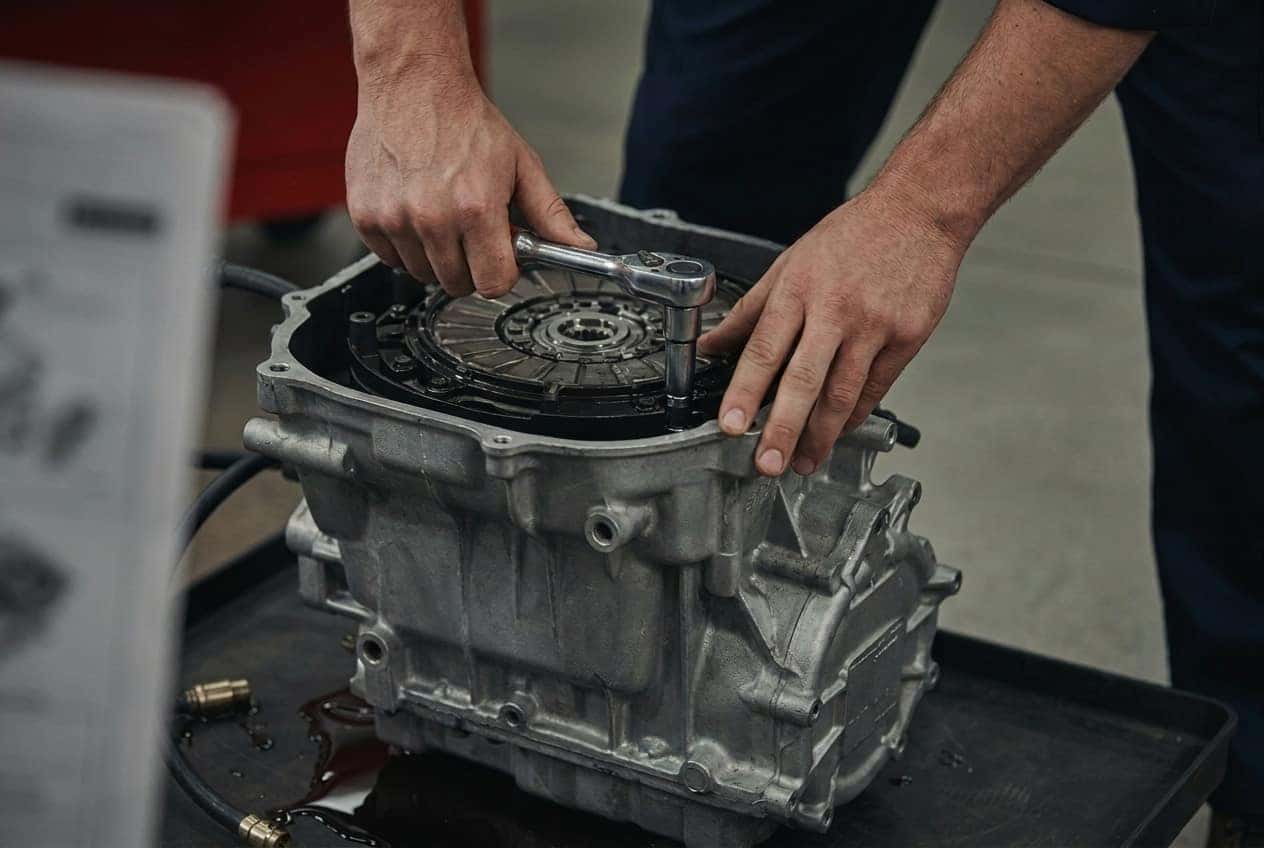
Volkswagen’s Direct Shift Gearbox, commonly called DSG, is a dual-clutch automated manual transmission found in models like the Golf GTI, Jetta GLI, Tiguan, and Atlas depending on trim and model year. Instead of using a torque converter like a conventional automatic, DSG uses two separate clutches, one controlling odd gears and the other controlling even gears. While the car is driving in one gear, the next gear is already pre-selected and waiting, which allows for shifts measured in milliseconds.
This design is what gives DSG-equipped Volkswagens their responsive, almost seamless shift feel. It is also what makes the transmission fundamentally different from a traditional automatic in terms of maintenance. The clutch packs generate friction and heat with every shift, and the fluid inside the unit is responsible for cooling those components, lubricating moving parts, and enabling hydraulic clutch actuation all at once.
Why DSG Fluid Service Intervals Are So Strict
Volkswagen specifies particular fluid types for DSG transmissions, and those fluids are formulated differently from fluid used in conventional automatics or manual gearboxes. Because the clutches inside a DSG generate friction wear particles as part of normal operation, the fluid gradually accumulates contamination over time, similar to how engine oil picks up combustion byproducts.
Most Volkswagen DSG transmissions call for fluid and filter service in a range around every 40,000 miles, though this can vary by specific transmission type and model year. Waiting well beyond that interval allows contaminated fluid to circulate through tight tolerances inside the mechatronic unit, which houses the transmission’s electronic and hydraulic control components. Once that unit is compromised, the repair is considerably more involved than a routine fluid change.
Skipping or delaying DSG service is one of the more common ways owners end up facing a transmission repair that could have been avoided. The fluid does not just lubricate; it is integral to how the clutches engage and disengage, so its condition has a direct relationship with shift quality and long-term durability.
Understanding the Mechatronic Unit
The mechatronic unit is essentially the brain of the DSG transmission, combining the transmission control module with the hydraulic valve body that actuates the clutches. It sits inside the transmission housing, submerged in the same fluid that lubricates the clutch packs, which means fluid contamination has a direct path to sensitive electronic and hydraulic components.
Adaptation resets are sometimes needed after fluid service, since the transmission control module learns clutch engagement points over time and stores that data. A qualified technician can perform an adaptation reset to help the transmission relearn optimal shift points following service, which can also help smooth out shift feel that has gradually drifted.
Clutch pack wear happens gradually and is normal to some degree, but aggressive driving, frequent stop-and-go traffic, or towing can accelerate it. Since the clutches are not something a driver can inspect visually, fluid condition and shift behavior are often the best indicators of how they are holding up.
Signs Your DSG Transmission Needs Attention
- Hesitation from a stop: A brief pause or shudder when pulling away from a stop light is one of the more commonly reported early symptoms of clutch wear or fluid degradation.
- Jerky or delayed shifts: Shifts that feel abrupt or take longer than usual to complete can point toward fluid contamination or a mechatronic unit beginning to struggle.
- Warning lights or reduced power modes: Some DSG-equipped vehicles will enter a protective mode with limited power if the system detects a fault, which should never be ignored.
- Unusual noises during gear changes: Whining, clunking, or grinding sounds during shifts warrant prompt inspection rather than a wait-and-see approach.
What DSG Service Typically Involves and Costs
A proper DSG service includes draining the old fluid, replacing the filter, and refilling with the correct Volkswagen-specified fluid to the precise level the system requires, since DSG transmissions are sensitive to both overfilling and underfilling. This is typically followed by a scan tool check and, when needed, an adaptation reset to restore smooth shift behavior.
Routine DSG fluid and filter service tends to cost more than a conventional oil change but remains a comparatively modest investment measured against the alternative. A mechatronic unit replacement involves both a costly part and significant labor to access and replace it, making preventive fluid service one of the more clearly worthwhile maintenance items a DSG owner can prioritize.
Morgantown Driving Conditions and Your Transmission
Morgantown’s terrain brings a mix of steep grades and winding roads, particularly around areas near the WVU campus and the hills surrounding downtown. Frequent uphill acceleration and downhill engine braking both place additional demand on the DSG’s clutch packs, since the transmission is constantly adjusting engagement to manage torque under changing loads.
Traffic congestion near campus during the school year adds another layer of stress, with frequent stop-and-go conditions that call for repeated clutch engagement over short distances. This kind of driving pattern generates more heat and friction wear over time than steady highway cruising, which is part of why owners in this area may benefit from staying on the earlier end of the recommended service window rather than pushing intervals to their outer limit.
Winter driving conditions around Morgantown also matter. Cold fluid is thicker and slower to circulate, so a DSG transmission in cold weather can feel notably different on startup until fluid temperature comes up. Keeping fluid fresh and at the correct specification helps the system perform consistently across the wide temperature swings common to the region.
Protecting a Transmission Built for Performance
The DSG transmission is engineered to deliver quick, confident shifts, but that performance depends on a level of maintenance precision that goes beyond what a conventional automatic requires. Fluid condition, adaptation resets, and attentive service scheduling all play a role in keeping the mechatronic unit and clutch packs functioning as designed.
Owners who stay ahead of the recommended service schedule tend to avoid the kind of gradual wear that eventually shows up as hesitation, rough shifts, or a costly repair. Working with a shop that understands the specific fluid requirements and service procedures for Volkswagen’s dual-clutch transmission makes a meaningful difference in how the vehicle drives for years to come. Volkswagen of Morgantown, located at 401 Mary Jane Wood Circle, Morgantown, WV 26501, United States, offers scheduled DSG service built around Volkswagen’s exact specifications, giving local drivers a straightforward way to keep their transmission shifting the way it was designed to.

0 comment(s) so far on VW DSG (Direct Shift Gearbox) Transmission Service