




Why Morgantown’s Potholes Deserve a VW Wheel Alignment and Suspension Bushing Check
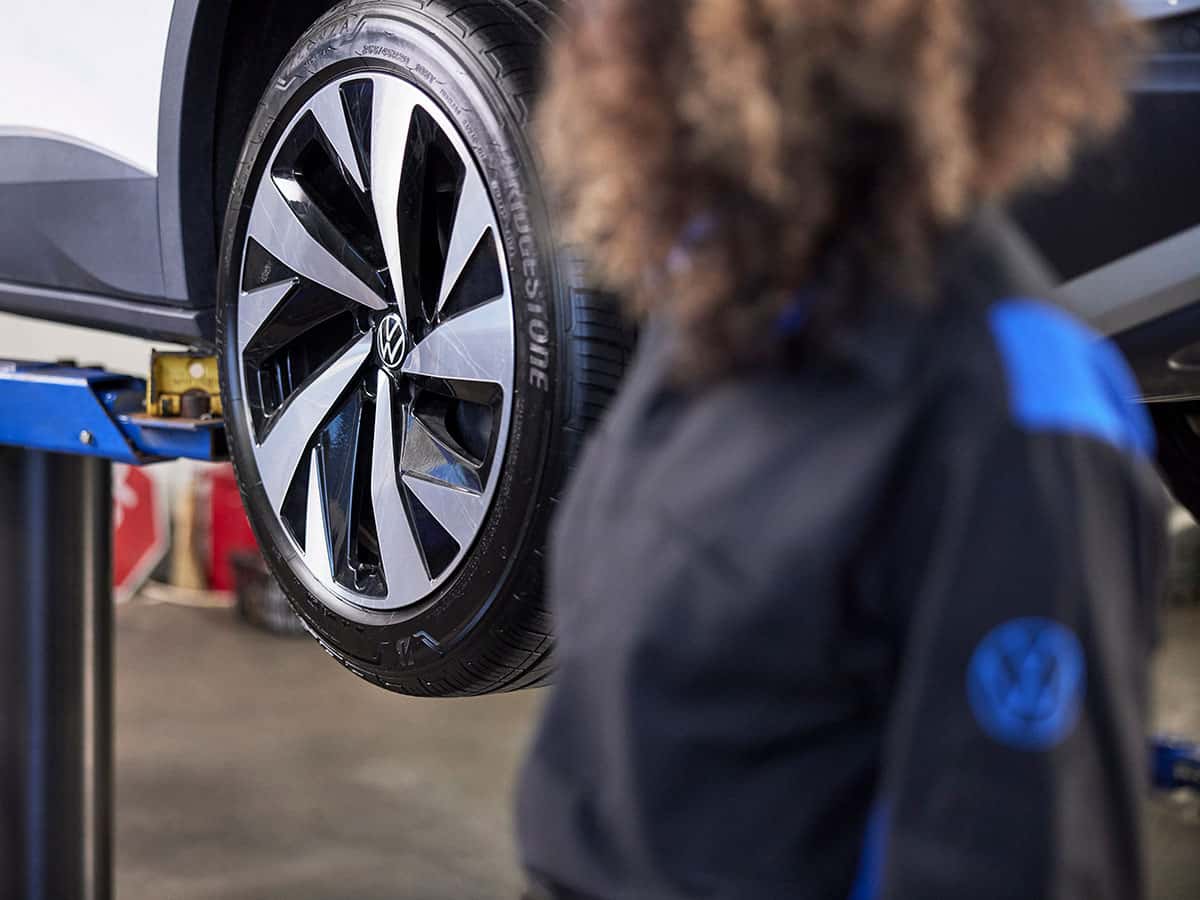
According to the most recent data from national transportation research nonprofit TRIP, 29 percent of Morgantown’s major roads are in poor condition, the highest percentage of any urban area in West Virginia by a significant margin. For context, the next closest city sits at 18 percent. In total, 51 percent of roads in the Morgantown area fall into either poor or mediocre condition, a figure that TRIP estimates costs the average local driver around $875 per year in additional vehicle operating costs. That $875 doesn’t appear as a single repair bill. It arrives in gradual increments: alignment drift after a hard pothole strike on Patteson Drive, a clunking suspension bushing that started on Spruce Street and got worse through the winter, tire wear patterns that developed slowly on Beechurst Avenue and only became obvious when the tires were rotated months later.
Understanding what Morgantown’s road conditions are specifically doing to VW suspension and alignment geometry, how bushing degradation and alignment drift interact in ways that compound each other’s damage, and when each type of service is the appropriate response gives Morgantown VW owners a practical framework for protecting vehicles that are working harder than the mileage alone would suggest.
Why Morgantown Potholes Are Particularly Hard on Suspensions
The mechanism that creates Morgantown’s potholes is the same one that makes them especially damaging to suspension components. West Virginia’s wet winters saturate the ground beneath road surfaces, and when temperatures drop below freezing, that moisture expands and creates voids beneath the pavement. Traffic load causes the unsupported surface to crack and collapse into those voids. The result is the sharp-edged, deep-walled potholes that Monongalia County residents have reported on Spruce Street, West Run Road, and throughout the city’s neighborhood streets.
A shallow, gradual depression in road surface is a discomfort. A sharp-edged pothole with a vertical or near-vertical wall is an impact event that sends a sudden, concentrated force through the tire and wheel directly into the suspension components. The deeper and more abrupt the edge, the higher the peak force transmitted to control arm bushings, strut mounts, tie rod ends, and wheel alignment geometry in the fraction of a second the tire drops into and climbs out of the hole.
From January through May 2024 alone, WVDOH crews filled 57,729 potholes in District 4, which includes Monongalia County, out of a statewide total of 277,309. That figure describes the maintenance response, not the total number of holes present at any given time. Morgantown VW owners navigating the city’s roads are encountering impact events at a frequency and severity that the suspension components were not designed to absorb indefinitely without periodic inspection.
What Pothole Impacts Do to Wheel Alignment
Wheel alignment describes the precise geometric relationship between all four tires and the vehicle’s centerline. The angles involved, primarily camber, toe, caster, and thrust angle, are set to VW’s factory specifications during manufacturing and are maintained within tight tolerances by the suspension geometry holding everything in its designed position. When a pothole impact forces a wheel and suspension component outside the range of normal travel, those angles can shift.
The most immediate alignment consequence of a significant pothole strike is toe change, particularly at the front axle. Toe describes the direction each tire points relative to the vehicle centerline, and even a small deviation from the specified angle causes the tire to scrub sideways against the road surface with every forward rotation rather than rolling straight. On Morgantown’s roads, where a driver on the Evansdale to downtown commute might encounter several significant impacts per trip, toe errors accumulate from multiple smaller events rather than a single dramatic impact.
Camber, the inward or outward tilt of each tire when viewed from the front, is less immediately affected by a single pothole strike but shifts progressively as the suspension components that maintain it, particularly control arm bushings and strut mounts, deteriorate from repeated impact loading. On a VW Jetta, Tiguan, or Golf with multi-link independent rear suspension, rear camber is particularly sensitive to bushing condition, and a rear camber angle that has drifted from specification causes the vehicle to track slightly sideways even when the steering wheel is pointed straight, a handling characteristic that develops so gradually most drivers adapt to it without consciously registering the change.
Suspension Bushings: The Component Morgantown Is Wearing Out
Suspension bushings are the rubber or polyurethane cylinders pressed into the pivot points of control arms, trailing arms, and subframe mounts that allow suspension components to move in their designed travel paths while isolating the chassis from road vibration and shock. They are the suspension system’s shock absorbers for the frequencies that the strut or shock absorber itself doesn’t address, and they are directly in the path of every pothole impact force that travels through the wheel and into the suspension structure.
Each significant pothole impact compresses and shears the bushing material at the control arm mounting points. Over many impacts, the rubber hardens and develops cracks that reduce its ability to cushion and isolate. As bushing condition deteriorates, the control arm it supports moves with increasing freedom outside its designed travel path, which changes the effective geometry of the suspension and allows alignment angles to drift even when no individual component has been bent or broken.
The symptoms of bushing deterioration on a Morgantown VW are recognizable once the driver knows what to listen and feel for:
- A clunking or knocking sound from the front suspension when driving over the sharp-edged pavement breaks that are common on Beechurst Avenue and throughout the city’s major arterials, which indicates the control arm is moving far enough in its worn bushing that the metal components are making intermittent contact
- A vague, imprecise steering feel that requires small constant corrections to hold a straight line, which develops as worn front bushings allow the control arm geometry to shift during driving loads
- Steering wheel vibration at highway speeds on US-119 or I-68 that wasn’t present earlier in ownership, which can indicate a strut mount bushing that has deteriorated enough to allow the strut to move slightly at its upper mounting point
- Uneven tire wear that appears primarily at the inner or outer edges of the tire tread, which reflects camber change resulting from bushing-related geometry shift rather than a simple alignment error that can be corrected by adjustment alone
The critical distinction between bushing-related wear and simple alignment drift is that worn bushings cannot be corrected by a wheel alignment adjustment alone. An alignment performed on a vehicle with significantly degraded bushings may produce readings that appear within specification on the alignment rack but will not hold those specifications in real driving, because the worn bushings allow the suspension geometry to shift under load. Replacing the bushings and then performing an alignment is the correct sequence; performing an alignment first and skipping the bushing inspection produces a result that deteriorates quickly and provides a false sense of security.
What Each Service Costs Compared to the Alternative
The cost relationship between proactive suspension and alignment service and the downstream consequences of deferring it is significant on Morgantown’s roads:
- A four-wheel alignment check and adjustment at a VW-certified service center typically runs between $100 and $175, and performed after any significant impact event or at annual intervals catches drift before it progresses to tire wear
- Control arm bushing replacement on a VW Jetta or Golf runs from approximately $248 to $455 per control arm including labor, with the alignment that should follow adding to the total but representing a complete repair rather than a temporary correction
- Premature tire replacement resulting from alignment-related uneven wear on a set of VW-spec tires costs $600 to $900 or more depending on the tire size and model, an expense that proper alignment at $150 could have prevented
- Tie rod end replacement, which becomes relevant when pothole impacts or degraded bushing geometry places sustained off-axis load on the tie rod, runs from $150 to $350 per side and typically requires an alignment immediately after
The TRIP report’s estimate of $875 in annual extra vehicle operating costs for Morgantown drivers reflects exactly this category of expense: suspension and tire costs that accumulate from road conditions rather than from vehicle age or driver error.
Building an Inspection Habit That Matches Morgantown’s Roads
Given the documented condition of Morgantown’s road network, the standard alignment check interval of every 40,000 miles that applies in moderate road quality environments is insufficient for local conditions. A more appropriate approach for Morgantown VW owners includes:
- An alignment check annually, timed to either the fall before winter freezing begins creating a new pothole season, or the spring after winter damage to roads has accumulated
- An immediate alignment and suspension inspection after any impact significant enough to feel through the steering wheel, produce a new noise from the suspension, or cause the vehicle to pull noticeably toward one side
- A bushing inspection at the same visit as any alignment service, performed by a VW-trained technician who can assess control arm and subframe bushing condition with the vehicle on a lift where the components are accessible
- Tire rotation at regular intervals with attention to whether wear patterns across all four tires are consistent, since uneven wear across axles or across a single tire’s width is one of the clearest indicators that alignment or bushing issues have been developing between service visits
The factory-trained service team at Volkswagen Morgantown, located at 401 Mary Jane Wood Circle, Morgantown, WV 26501, performs four-wheel alignment using VW-specific equipment and conducts suspension bushing inspections as part of any alignment or tire service visit. Schedule your inspection and get ahead of what Morgantown’s roads are doing to your suspension before it shows up on your tires.

0 comment(s) so far on Why Morgantown’s Potholes Deserve a VW Wheel Alignment and Suspension Bushing Check