




WV Highway Freeze-Thaw Potholes: Signs Your VW Needs Suspension Bushings & Alignment
Key Takeaways
- Bushings absorb the hits first: The rubber isolators in your control arms, sway bar links, and subframe mounts cushion every pothole strike, so they crack and soften long before metal parts fail.
- Alignment drifts without warning: A single hard impact can change toe and camber enough to wear a tire unevenly, even when the steering wheel looks straight.
- Worn bushings and bad alignment feed each other: Loose bushings let the wheel shift under load, and that movement keeps pulling the alignment out of specification.
- Tires are the real cost: Uneven wear can ruin a set of tires within a season, which usually costs more than the bushings and alignment that would have prevented it.
Anyone who drives Route 7, the Mileground, or the I-79 and I-68 corridors around Morgantown knows how fast a smooth road can turn into a patchwork of craters once the freeze-thaw cycle begins. Each hit sends a jolt through your Volkswagen’s suspension, and the parts that take the brunt are small and easy to overlook. A bushing inspection and alignment cost a fraction of what it takes to replace a set of chewed-up tires and the control arms that wore out along with them.
How Freeze-Thaw Cycles Damage Your Suspension
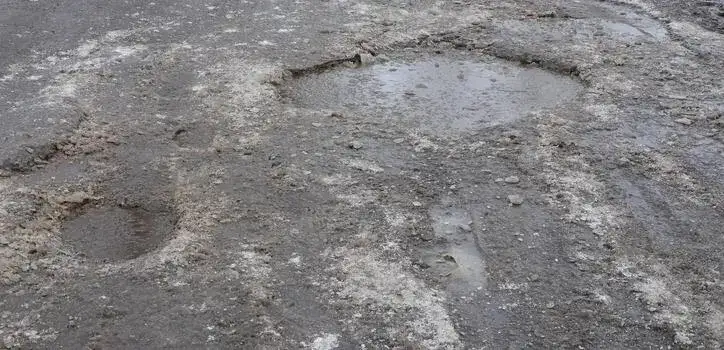
Potholes form when water seeps into cracks in the pavement, freezes overnight, and expands. When the temperature climbs again the ice melts, leaving a void under the surface that collapses under traffic. Monongalia County sees temperatures cross the freezing line many times each winter, which is why road crews are often patching the same stretches repeatedly. You can check current road conditions and closures through the West Virginia 511 traveler information service before heading out on a rough commute.
Your Volkswagen’s suspension is built to handle bumps, but it is not built to handle hundreds of sharp impacts in a single season. Every time a wheel drops into a hole and slams out the other side, force travels up through the tire, wheel, control arm, and into the chassis. Rubber bushings sit at each of those connection points and flex to absorb the shock. Cold weather makes rubber stiffer, so a bushing is more likely to crack or tear when it is hit hard on a freezing morning. Salt and road brine can also speed up the breakdown of rubber over time.
What Suspension Bushings Actually Do
A bushing is a rubber or polyurethane sleeve that sits between two metal parts, such as a control arm and the subframe. It lets the suspension move freely in the intended direction while keeping unwanted movement under control. It also isolates noise and vibration so the road does not rattle through the cabin.
On most current Volkswagen models, including the Jetta, Taos, Tiguan, and Atlas, bushings are found in the front lower control arms, the rear suspension links, the sway bar attachments, and the subframe mounts. When a bushing is healthy, it holds each component at a precise angle. When it is cracked, dried out, or torn, the part it supports can shift under braking, acceleration, or cornering, and that looseness changes how the wheel meets the road. Because bushings wear slowly, many drivers adapt to the change without noticing, which is why a problem can go on for months before anyone catches it.
Signs Your VW Needs Bushings or an Alignment
The symptoms of a worn suspension and a bad alignment overlap quite a bit. Watch for these signs after a rough stretch of winter roads:
- Pulling to one side: The car drifts left or right on a straight, flat road, or the steering wheel sits off-center when you drive straight.
- Clunking or knocking over bumps: A dull knock from a corner often points to a worn bushing or a loose link.
- Vague or loose steering: The wheel feels less precise, and the car seems to wander in its lane.
- Uneven or rapid tire wear: The inner or outer edge of a tire wears down faster than the rest of the tread.
- Vibration under braking: A shudder when slowing down can come from a worn control arm bushing allowing the wheel to move.
- Squeaks or creaks at low speed: Dry or cracked rubber often groans when the suspension flexes over a driveway or speed bump.
Any one of these deserves a look. If you hit a pothole hard and notice a new noise or a change in steering afterward, do not wait for the next scheduled service.
Why Alignment Matters After a Pothole Strike
Alignment describes the angles at which your wheels meet the road. The three main settings are toe, camber, and caster. Toe is the direction the tires point relative to each other, camber is the tilt of the wheel in or out, and caster affects steering stability and how well the wheel returns to center. Volkswagen specifies each of these within a narrow range, and even a small shift can change how the tires wear.
A hard pothole hit can bend a tie rod or push a control arm slightly out of position. The change may be too small to feel, but it adds up on the tread. A tire that is dragged slightly sideways with every mile will scrub away rubber and can wear unevenly in just a few thousand miles. The National Highway Traffic Safety Administration’s tire safety page explains how tire condition affects handling and stopping, which is one more reason to correct alignment problems early.
Alignment and bushings should be considered together. If a bushing is worn and the alignment is set without fixing it, the wheel can shift out of position again soon after. That is why many technicians inspect the suspension first and recommend replacing worn parts before adjusting the angles. It is also a good idea to have the alignment checked whenever new suspension parts are installed or new tires are mounted.
What a Suspension and Alignment Inspection Covers
A proper inspection starts with a visual and hands-on check of the suspension components. A technician raises the vehicle and looks at each bushing for cracks, splits, and fluid contamination, and checks the control arms, ball joints, tie rod ends, and sway bar links for play. Mounts and subframe attachment points are examined as well, since a loose subframe can throw off the geometry of the entire front end.
The tires are inspected too. Wear patterns reveal a lot about what the suspension has been doing, and cupping, feathering, or a worn inner edge points to specific problems. Sidewall bulges, bent wheels, and cracked rims are common after pothole damage, and they can create vibration that is easy to mistake for a suspension fault.
Once any worn parts are addressed, a computerized alignment measures all four wheels and adjusts them back to Volkswagen’s specification. The printout shows the readings before and after, which makes it easy to see how far things had drifted. If you want to see which services your model is due for, the dealership’s maintenance menu is a good place to start.
What Waiting Can Cost
Prices vary by model and by the work required, but this overview shows how early attention compares with waiting:
- Suspension inspection: A quick, low-cost check that finds worn bushings, loose links, and damaged parts before they spread.
- Wheel alignment: A modest service that protects your tires and restores straight, stable steering.
- Bushing or control arm replacement: A moderate repair that restores the suspension’s precision and quiets noises.
- Replacing tires worn by bad alignment: One of the most common and avoidable expenses, often costing far more than the alignment that would have prevented it.
Seen side by side, the pattern is clear. A small, early service prevents the expensive chain of repairs that tends to follow a damaged suspension. Volkswagen Care maintenance plans can also help owners keep routine service on a schedule and spread out the cost over time.
Driving Habits That Help Between Visits
A few habits reduce the damage from rough winter pavement. Keep extra distance behind the vehicle ahead so you can see potholes early and steer around them when it is safe. Slow down before you reach a hole instead of braking in the middle of it, since braking compresses the front suspension and makes the impact harder. Keep your tires at the pressure listed on the driver’s door jamb, because underinflated tires are more likely to suffer sidewall damage and bent wheels, and pressure drops as the temperature falls.
Pay attention to how the car feels in the days after a hard hit. A new pull, a vibration, or an unfamiliar noise is your Volkswagen telling you that something has changed, and an early inspection is almost always cheaper than waiting for the problem to grow.
Keep Your Volkswagen Straight and Steady in Morgantown
Before another round of freezing nights and thawing afternoons chews up more pavement, have your suspension and alignment checked so small problems stay small. The service team at Volkswagen Morgantown, located at 401 Mary Jane Wood Circle, Morgantown, WV 26501, United States, can inspect your bushings and suspension components, correct your alignment, and keep your tires wearing evenly all season. You can schedule service online and drive into spring with a suspension that feels as tight as the day you bought it.

0 comment(s) so far on WV Highway Freeze-Thaw Potholes: Signs Your VW Needs Suspension Bushings & Alignment